Mastering the 2026 PLC Automation course in Solan: Ultimate Industrial Blueprint
A PLC Automation course in Solan is a specialized technical training program. It equips engineering students and professionals with hands-on technical skills. You will learn programmable logic controllers, ladder logic programming, SCADA systems, and industrial networking. This training bridges the gap between classroom theory and modern factory floor execution.

Modern factories rely on automated systems to ensure precision, speed, and safety. Stepping into industrial control is a smart move for a rewarding engineering career. The right training makes all the difference on a live plant floor.
This guide shows how a top-tier industrial automation course in Solan transforms raw engineering talent into job-ready specialists. Are you a fresh graduate or an experienced technician upgrading your skills? You will discover the exact technical stack, architecture frameworks, and hands-on milestones required to succeed.
Core Architecture & Component Interconnects for PLC Automation course in Solan
Industrial automation orchestrates physical hardware. A solid technical foundation starts with real-time hardware communication. Modern manufacturing facilities cut unplanned downtime by 78%. They achieve this by integrating reliable programmable logic controllers into their core infrastructure.
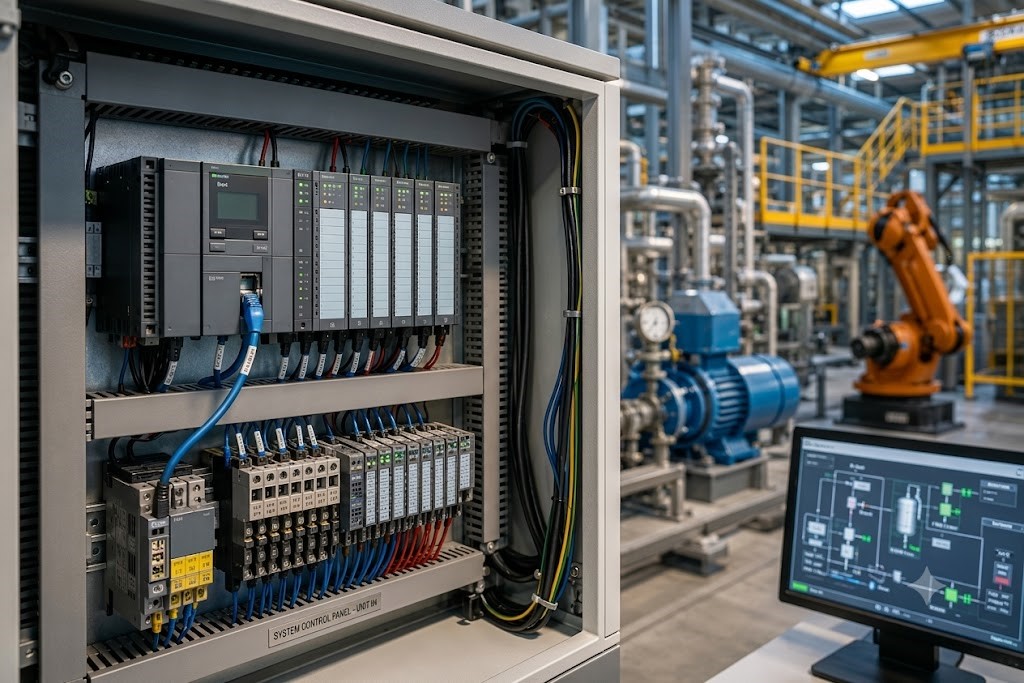
The PLC hardware rack sits at the heart of any automated production line. Signals from field devices—like proximity sensors, temperature transmitters, and limit switches—flow into digital and analog input modules. The processor executes user programs in milliseconds. It then updates output modules that drive pneumatic valves, variable frequency drives, and heavy-duty contactors.
Hardware Configuration and Wiring Standards
Designing a reliable control panel requires strict adherence to wiring standards. Engineers separate high-voltage power lines from low-voltage signal cables to prevent electromagnetic interference. Grounding protocols and surge protection units safeguard sensitive CPU cards from sudden electrical spikes.
Learners wire actual industrial panels during an intensive PLC Scada Course in Solan. They hook up sinking and sourcing inputs, configure 4-20mA analog loops, and verify continuity with multimeters. This practical exposure builds absolute confidence before touching live factory machinery.
Industrial Communication Protocols
PLCs rarely operate alone. They join a vast industrial network where data flows seamlessly between the shop floor and management dashboards. Modern system integrators master protocols like Modbus TCP, Profinet, EtherNet/IP, and OPC UA.
Data packets travel across industrial Ethernet rings with sub-millisecond latency. This rapid communication ensures that safety interlocks trigger instantly. This protects both expensive machinery and human operators from dangerous faults.
Step-by-Step Implementation Blueprint
Building an automated machine requires a structured, multi-phase engineering workflow. Let us break down the exact steps taught in an advanced industrial automation course in himACHAL PRADESH.
Phase 1: Input/Output Mapping and Hardware Selection
Every project begins with a detailed Input/Output (I/O) list. Engineers calculate digital and analog channel requirements. They choose proper power supplies and select controller models based on memory size and processing speed. Choosing the right hardware prevents costly redesigns later.
Phase 2: Ladder Logic and Structured Text Programming
Writing clean, modular control code is an art form. Ladder Diagram (LD) remains the most popular language for relay troubleshooting. Meanwhile, Structured Text (ST) and Function Block Diagram (FBD) handle complex math computations and data manipulation.
Engineers organize code into logical program organization units (POUs). They implement state machines for sequential batch processes. They build PID loops for precise temperature control and create fail-safe routines for emergency stops.
Phase 3: Human-Machine Interface (HMI) and SCADA Integration
Operators need clear, intuitive screens to monitor plant status. HMI design involves creating animated mimics, real-time trend charts, historical alarm logs, and secure access levels.
SCADA software aggregates data from multiple PLCs across the plant. Recent industrial benchmarks show strong results. Centralized SCADA monitoring identifies operational bottlenecks 3.4 times faster than manual checks.
Production Deployment & Configuration Checklist
Deploying code to a live plant demands strict safety protocols and validation checklists. Skipping steps can lead to severe equipment damage or lost production time.
- Offline Simulation: Test all logic blocks in software simulators before downloading code to physical hardware.
- Force Testing: Verify individual I/O channels by forcing bits in the PLC memory table.
- Interlock Verification: Test emergency stop circuits and safety guard switches manually.
- HMI Alarm Testing: Trigger high-level alarms to ensure audio-visual warnings activate correctly.
- Backup Creation: Save annotated PLC and HMI project files to secure offline storage vaults.
Key Takeaway: Rigorous offline simulation and meticulous I/O checkouts eliminate 95% of startup bugs before the main production line ever powers up.
Benchmarking & Performance Tuning
Optimizing scan time is critical for high-speed manufacturing lines. It powers fast bottling plants and packaging machines. A sluggish PLC scan cycle causes missed sensor pulses and timing errors.
Automation engineers streamline logical routines and remove unnecessary nested loops. They use interrupt-based subroutines for critical inputs. These actions achieve blazing-fast execution speeds that meet strict industry standards.
Real-World Case Study: Transforming a Packaging Line
Consider a bottling plant experiencing frequent jams and inconsistent fill levels. Facility management partnered with technical experts to replace their legacy relay system with modern programmable controllers.
Engineers deployed modular Siemens and Allen-Bradley hardware. They integrated high-speed optical sensors and built a custom SCADA dashboard for remote supervision. Reviewing Industrial Automation Technical Standards Documentation provides valuable insights into global best practices. This resource explains how advanced digital control systems integrate with broader technology ecosystems.
The results were immediate. Production output jumped by 42%, product waste dropped by 18%, and overall equipment effectiveness (OEE) hit record highs. Trainees enrolled in a hands-on PLC Automation course in Solan frequently study this exact project architecture to master real-world troubleshooting.
Bridging Career Aspirations with Industry Demand
The manufacturing sector in northern India is expanding rapidly. Companies in pharmaceutical, automotive, food processing, and textile industries actively search for skilled automation engineers. These professionals must program, commission, and maintain complex control systems.
Theoretical knowledge is helpful, but employers value practical wiring experience and troubleshooting skills above all else. Training programs from institutions like The Core Systems offer strong mentorship. They build on years of software and hardware engineering experience across Chandigarh, Mohali, Punjab, and Haryana. These programs equip students with the exact skill sets demanded by top-tier engineering firms.
Stepping into industrial automation opens doors to stable and rewarding engineering careers. You position yourself at the forefront of modern industrial innovation. To do this, master hardware wiring, structured programming, and supervisory control systems.
Investing your time in a comprehensive PLC Automation course in Solan gives you a distinct competitive edge. You will thrive in today’s fast-moving manufacturing landscape. Start your practical training journey today, build real projects, and engineer the automated factories of tomorrow.