Is PLC programming in demand? The short answer
Yes, PLC programming is in high demand, and the demand keeps growing. Every automated factory, water plant, packaging line and pharma unit runs on PLCs, and there are not enough skilled people to program, commission and maintain them.

If you are an engineering student, a diploma holder, an electrician or a working technician wondering about the PLC programming career scope, this guide gives you the facts: market growth, the industries hiring, real salary data for India, the skills employers ask for, and how AI will change the job.
At The Core Systems, we deliver PLC automation projects for industry and train engineers through our advanced PLC course. What follows is what we see on the shop floor every week, backed by current market data.
What is PLC programming?
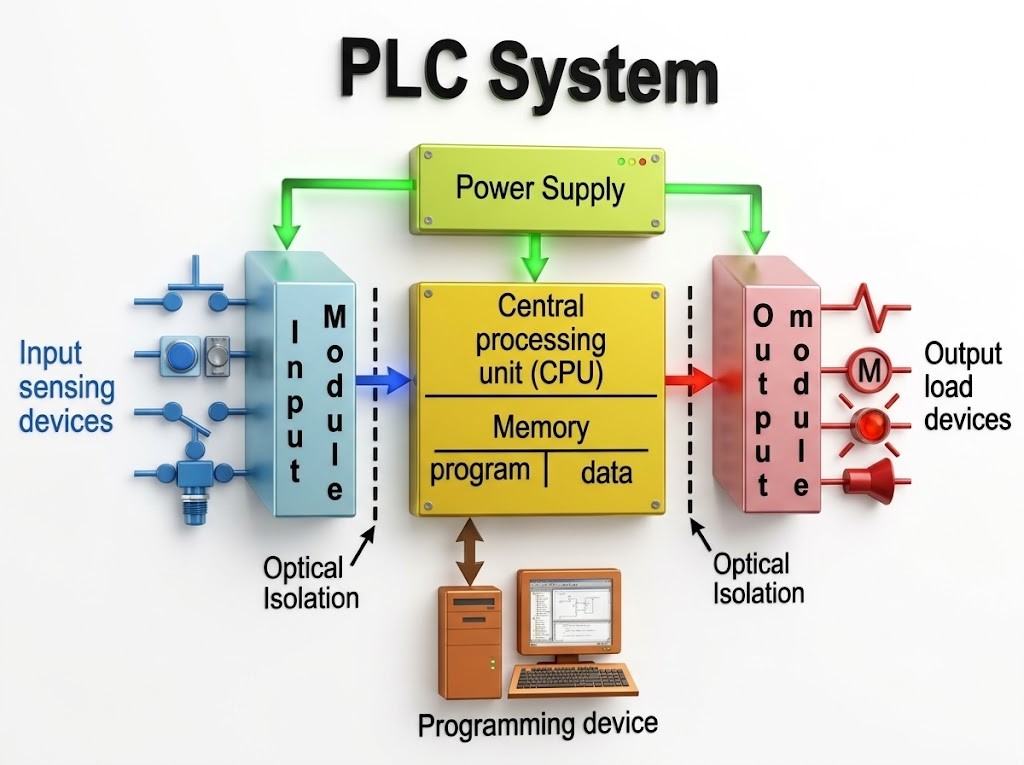
PLC programming is writing the logic that tells a Programmable Logic Controller how to run a machine or process. A PLC reads inputs (sensors, switches, push buttons), runs your program, and drives outputs (motors, valves, conveyors, alarms) in milliseconds, around the clock.
PLC programmers work in the five IEC 61131-3 languages:
- Ladder Diagram (LD) – the most common, built to look like electrical relay logic
- Function Block Diagram (FBD) – blocks wired together, popular in process control
- Structured Text (ST) – a text language similar to Pascal, used for complex maths and data handling
- Sequential Function Chart (SFC) – step-by-step sequences for batch processes
- Instruction List (IL) – a low-level language, now rarely used
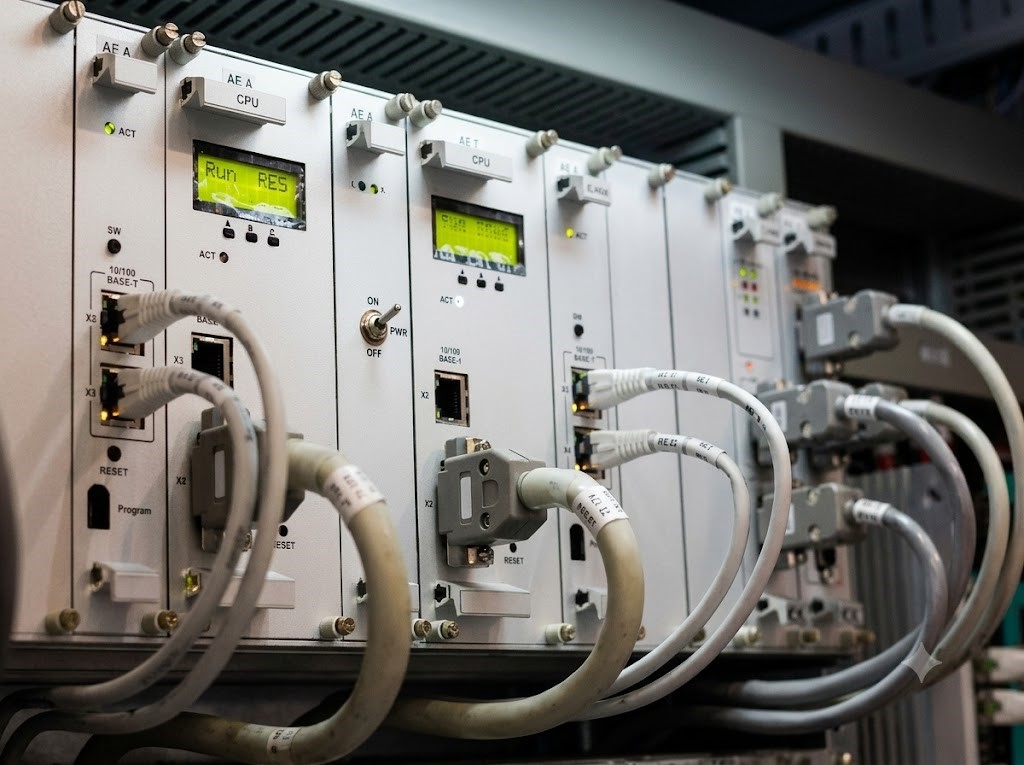
The job rarely stops at the PLC. Most roles also include HMI screens, SCADA systems, VFDs, sensors, industrial networks and on-site commissioning. That broad skill set is exactly why trained PLC engineers are hard to find.
Why PLC programming is in demand: 4 reasons
1. The PLC market keeps growing
Forecasts differ by research firm, but all point up. Global Market Insights projects the global PLC market to nearly triple over a decade, growing about 11.4% a year (GMI). Fortune Business Insights is more conservative at about 6.2% a year, and notes Asia Pacific holds the largest share of the market, close to 40% (Fortune Business Insights). More PLCs installed means more people needed to program and service them.
2. Industry 4.0 and smart factories
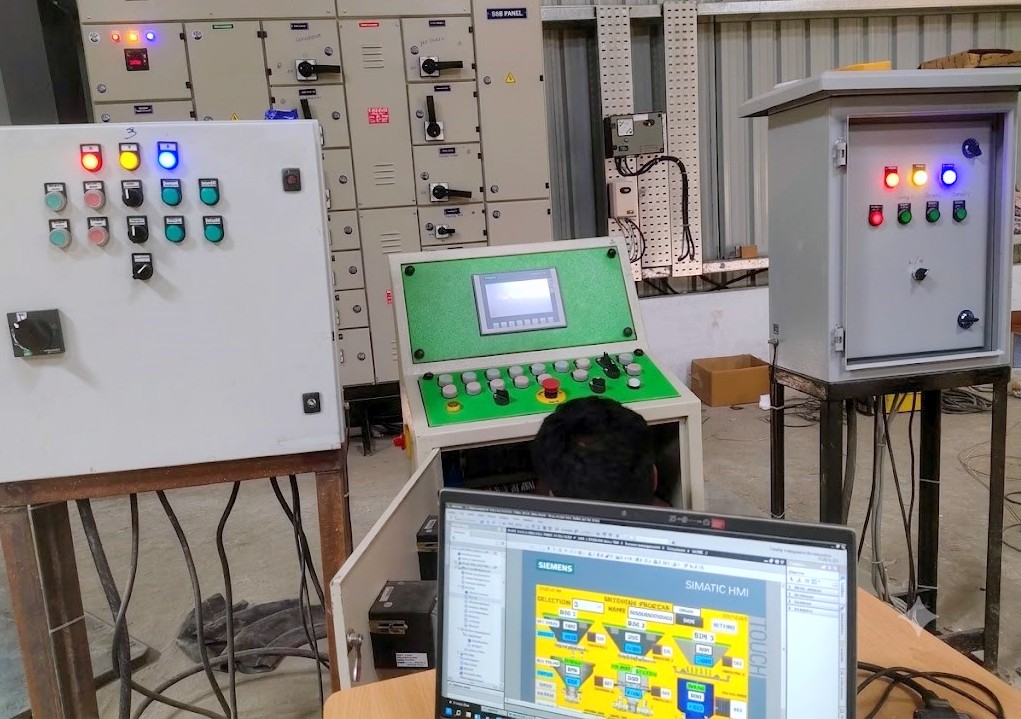
Smart manufacturing connects PLCs to SCADA, MES, cloud dashboards and IIoT devices. Companies now want engineers who can program a PLC and get its data onto a network. That raises both the demand and the pay for well-trained people.
3. A real skills gap
Deloitte and The Manufacturing Institute estimate US manufacturing alone could need 3.8 million new workers within a decade, and up to 1.9 million of those jobs could go unfilled if the skills gap is not closed (Automation.com). A later Deloitte analysis expects manufacturing technician jobs to grow six times faster than production jobs (MMH). The same pattern shows up in India: plenty of applicants, too few with hands-on automation skills.
4. Every legacy plant needs upgrades
Thousands of plants still run on old relay panels or obsolete PLCs. Migrating them to modern controllers, adding HMIs and connecting them to SCADA is steady, well-paid project work for automation engineers and system integrators like us.
PLC programming demand in India
India is one of the fastest-growing markets for automation skills. Ken Research estimates the Indian industrial automation market is growing about 8.4% a year (Ken Research). IMARC expects the India machine automation controller market to roughly double over the next decade, growing about 8% a year (IMARC).
Growth in domestic manufacturing, the PLI schemes and new plants in electronics, EV, pharma and food processing all add PLC-controlled lines that need engineers.
Industries hiring PLC programmers in India and abroad:
- Automotive and auto components
- Food, beverage and packaging
- Pharmaceuticals and FMCG
- Textiles, paper and steel
- Oil and gas, chemicals and petrochemicals
- Power, renewable energy and utilities
- Water and wastewater treatment
- Cement, mining and material handling
- Warehousing, logistics and airport baggage systems
- Machine builders (OEMs) and system integrators
PLC skills also travel well. Indian automation engineers with Siemens, Allen-Bradley or Mitsubishi experience regularly find commissioning and maintenance roles in the Gulf, Europe and Southeast Asia.
PLC programmer salary in India and top job roles
PLC pay in India starts modest and rises fast with experience. Flexiple’s salary data on more than 4,000 Indian PLC programmers shows median pay growing about 4.2 times over a career, from ₹4.7 lakh a year at 0–2 years to ₹19.6 lakh at 12+ years, with Pune holding the largest talent pool (Flexiple). Indeed job postings put entry-level PLC programmer pay between roughly ₹16,600 and ₹49,700 a month, with Bengaluru and Pune paying the most (Indeed).
- PLC programmer / trainee automation engineer (0–2 years): ₹2.5–5 lakh per year
- Applications engineer (PLC/automation) (2–5 years): around ₹5 lakh per year median (PayScale)
- Automation / controls engineer (PLC + SCADA + HMI) (3–7 years): ₹5–10 lakh per year
- Electrical engineer with strong PLC skills (7+ years): around ₹7.9 lakh per year median, with the top 10% near ₹20 lakh (PayScale)
- Senior automation lead / commissioning specialist (10+ years): ₹15–20 lakh+ per year
- Overseas commissioning engineer (Gulf, Europe) (5+ years): often several times Indian pay
Ranges are indicative and vary by city, company, brand experience (Siemens, Allen-Bradley, etc.) and whether the role includes site travel.
The biggest pay jumps come from three things: hands-on project experience, knowing more than one PLC brand, and adding SCADA, drives and industrial networking to your PLC skills.
Skills employers want from PLC programmers
When we hire for our own projects, and when companies ask us for trained candidates, these are the skills that matter:
- PLC programming on major brands – Siemens (TIA Portal, S7-1200/1500), Allen-Bradley (Studio 5000, RSLogix), Mitsubishi, Delta, Schneider, Omron
- Ladder logic plus Structured Text – ST is increasingly expected for complex logic and data handling
- HMI design – building operator screens with alarms, trends and recipes
- SCADA systems – WinCC, FactoryTalk, Wonderware/AVEVA, Ignition
- VFDs and servo drives – parameter setting, speed control and motion basics
- Industrial communication – Modbus, Profinet, Profibus, EtherNet/IP, OPC UA
- Electrical fundamentals – reading wiring and control panel drawings, sensors, field instruments
- Troubleshooting and commissioning – finding faults fast on a live machine
- IIoT and data skills – sending PLC data to dashboards, MQTT, basic SQL
- Safety – interlocks, emergency stops and safety PLC basics
Theory alone does not get you hired. Employers want people who have worked on real PLCs, written real programs and fixed real faults.

Will AI replace PLC programmers? The future of PLC programming
No. AI will change how PLC programmers work, but it will not replace them. Deloitte’s manufacturing outlook still expects people to perform 81% of task hours in the sector, even as automation spending rises (MAU).
Here is why the role is safe:
- Physical work stays physical. Someone has to wire panels, test I/O, commission machines and fix faults on site.
- Safety needs human sign-off. A wrong output can injure a person or wreck a machine. Plants will not trust unchecked AI code on live equipment.
- Every plant is different. Process knowledge, customer requirements and old equipment quirks are hard to automate.
What will change: AI tools will help write boilerplate code, document programs and suggest fixes. Engineers who use these tools well, and who add IIoT, data and networking skills, will earn the most. The future of PLC programming belongs to engineers who keep learning.
How to start a PLC programming career with The Core Systems
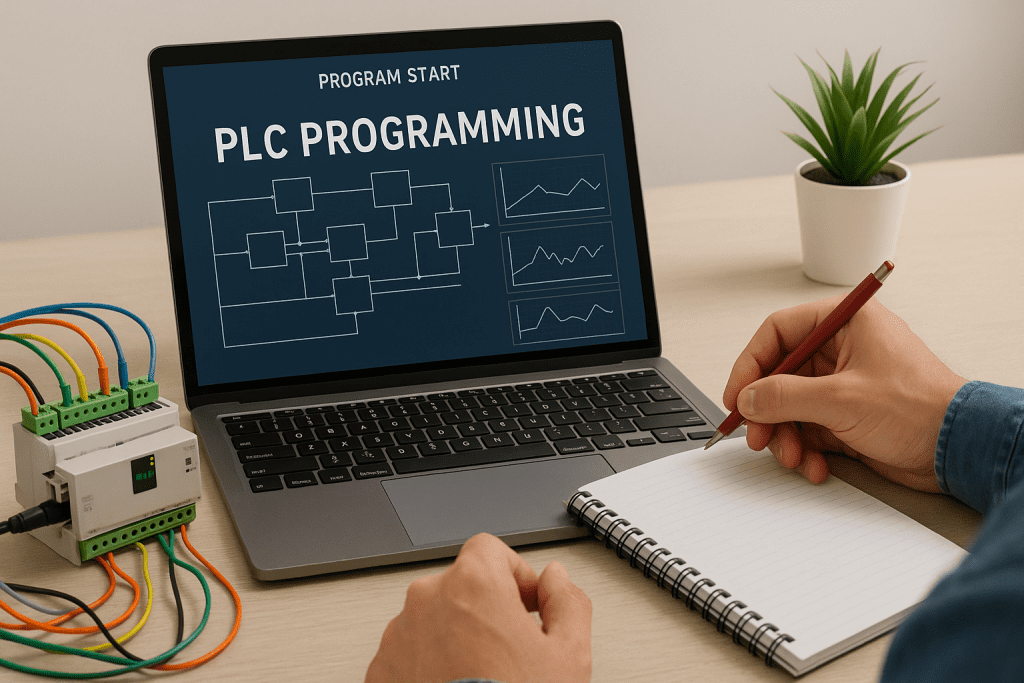
The fastest route into a PLC automation job is practical, hands-on training on industrial hardware. Here is the path we recommend: TheCoreSystems has one of The Best PLC automation labs in the region.
- Learn the basics – electrical fundamentals, sensors, relays and how a PLC scans its program.
- Master ladder logic – timers, counters, comparisons and sequencing on a real PLC.
- Add a second brand – most jobs list Siemens or Allen-Bradley; knowing both widens your options.
- Learn HMI and SCADA – build operator screens and connect them to your PLC.
- Work with drives and networks – VFDs, Modbus, Profinet and Ethernet/IP.
- Build real projects – a conveyor, a tank-level system, a bottle-filling line; show them in interviews.
- Get placement support – resume help, interview practice and industry referrals.
Why train at The Core Systems?
The Core Systems is a working PLC automation company, not just a classroom. Our trainers deliver automation projects for industry, so our advanced PLC & SCADA course teaches what the field actually needs:
- Hands-on practice on industrial PLCs, HMIs, SCADA and VFDs
- Real industry projects and troubleshooting exercises
- Training built around current job requirements
- Guidance from engineers who commission live systems
- Career and placement support after the course
Ready to build a career in industrial automation? Book a free demo class or explore our advanced PLC course today.
Need PLC programming, panel or SCADA work for your plant? Talk to our automation services team.
Frequently asked questions
Is PLC programming in demand today?
Is PLC programming a good career in India?
What is the salary of a PLC programmer in India?
Is PLC programming hard to learn?
Can a non-engineer learn PLC programming?
Which PLC brand should I learn first?
Will AI replace PLC programmers?
How long does it take to become a PLC programmer?
Conclusion: PLC programming is a career with a future
So, is PLC programming in demand? The data says yes: the PLC and industrial automation markets are growing, manufacturers face a real skills gap, and pay rises steeply for engineers with hands-on experience. AI will change the tools, not the need for skilled people.
The best time to start is now. Join The Core Systems advanced PLC course and learn PLC, HMI, SCADA, and drives from engineers who build automation systems every day.
Enquire about the next batch
Sources
- Global Market Insights – PLC market size & forecast
- Fortune Business Insights – PLC market key takeaways
- Automation.com – Deloitte/MI: 3.8 million manufacturing jobs needed
- MMH – Deloitte: technician employment growth
- MAU – Technical skills gap report
- Ken Research – India industrial automation market
- IMARC – India machine automation controller market
- Flexiple – PLC programmer salary in India
- Indeed India – PLC programmer salaries
- PayScale – Applications engineer with PLC skills, India
- PayScale – Experienced electrical engineer with PLC skills, India