Mastering Industrial Automation: The Ultimate Path Through a PLC Programming Course in India
The landscape of modern manufacturing, smart factories, and industrial production is undergoing a rapid, technology-driven revolution. Across the globe, conventional assembly lines are being replaced by interconnected, automated systems that maximize precision, minimize downtime, and scale output. At the very heart of this transformation lies the Programmable Logic Controller (PLC). For engineering graduates, aspiring developers, and tech professionals looking to stay ahead of the curve, enrolling in a top-tier PLC programming course in India is no longer just an optional credential—it is a critical career accelerator.
Industrial automation dictates how modern plants operate, manage energy, and maintain quality control. Whether you are looking to step into the manufacturing sector or transition into intelligent industrial systems, mastering core automation logic opens doors to high-paying engineering roles. This comprehensive exploration delves into why a specialized PLC Programming Course is essential, what you will learn, and how training with an industry leader like The Core Systems can shape your professional trajectory.
The Evolution of Modern Manufacturing and Automation
Manufacturing has evolved dramatically over the past century. From steam-powered machinery to computerized assembly lines, each industrial revolution has redefined human labor and machine capability. Today, we live in the era of Industry 4.0, where automation, data exchange, cloud computing, and artificial intelligence converge.
[whatsapp_btn]
Why Industrial Automation Matters Today
- Precision and Speed: Automated controllers execute repetitive tasks with microscopic precision, eliminating human error.
- Operational Safety: Hazardous environments, such as chemical plants or heavy metal foundries, rely on automated systems to keep human workers out of harm’s way.
- Cost Efficiency: Automated plants experience less material waste, optimized energy consumption, and significantly reduced equipment failure rates.
The Role of PLCs in Smart Factories
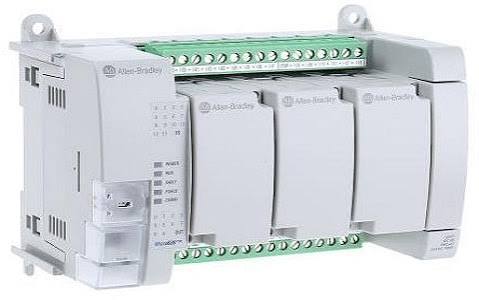
Programmable Logic Controllers serve as the industrial brains behind machinery. They monitor inputs from sensors, make logical decisions based on programmed instructions, and control outputs that drive motors, valves, and actuators. Understanding how these controllers operate is fundamental for anyone entering industrial engineering. A structured PLC programming course in India bridges the gap between theoretical academic knowledge and fast-paced, real-world factory floors.
What is a PLC Programming Course in India?
A specialized training program designed to teach students and professionals how to design, program, troubleshoot, and maintain industrial control systems is known as a Plc programming course in India. These courses move beyond textbooks, offering immersive practical modules that simulate actual factory environments.
Core Objectives of Professional Training
- Understanding Logic Gates and Instructions: Translating complex industrial requirements into structured ladder logic or functional block diagrams.
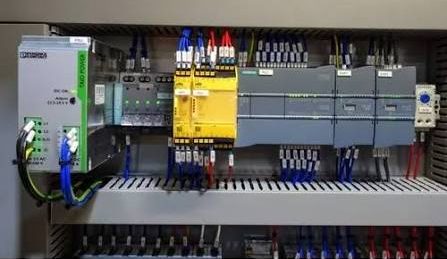
- Hardware Configuration: Learning how central processing units, input/output modules, communication cards, and power supplies interconnect.
- Debugging and Troubleshooting: Developing the sharp analytical skills required to identify faulty sensors, logic errors, or communication glitches in live systems.
Comprehensive Curriculum Overview
To truly master industrial automation, a robust training program must cover everything from foundational electrical concepts to advanced system integration. Below is an exhaustive breakdown of what a professional curriculum entails.
1. Fundamentals of Industrial Electricity and Sensors
Before writing a single line of code, students must understand how physical components interact with control panels.
- Digital and Analog Signals: Differentiating between discrete switches (ON/OFF) and continuous variables (temperature, pressure, flow rate).
- Sensors and Actuators: Working with proximity sensors, photoelectric switches, thermocouples, pneumatic cylinders, and stepper motors.
- Relay Logic: Understanding electromagnetic relays, contactors, and timer circuits that laid the groundwork for modern programmable controllers.
2. Introduction to PLC Hardware Architecture
Every student taking a PLC Programming Course must become familiar with the physical anatomy of industrial controllers.
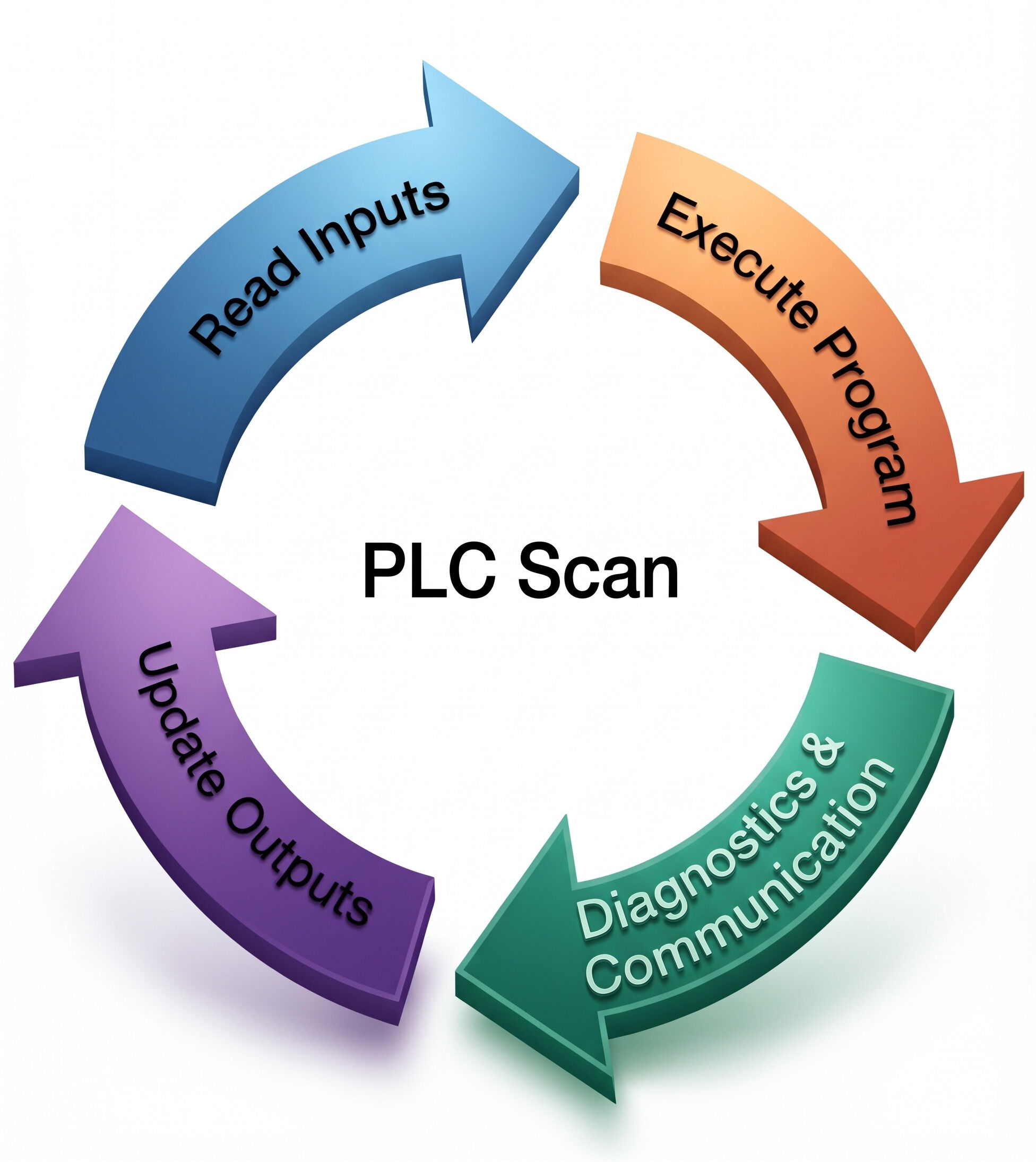
- CPU and Memory: How the processor scans inputs, executes the user program, and updates outputs.
- I/O Modules: Managing local and remote input/output racks safely.
- Communication Ports: Understanding industrial networking protocols used for data transfer between controllers and supervisory computers.
3. Programming Languages and Standards (IEC 61131-3)
Modern automation platforms support multiple programming paradigms, allowing engineers to choose the most efficient method for a given task.
- Ladder Diagram (LD): The most widely used graphical language that mimics traditional electrical relay schematics.
- Structured Text (ST): A high-level, text-based language ideal for complex mathematical computations and data manipulation.
- Function Block Diagram (FBD): A graphical language well-suited for systems involving continuous signal processing.
4. Human-Machine Interface (HMI) Integration
An automated machine is only as good as its operator interface.
- Screen Design: Creating intuitive dashboards for plant operators.
- Alarm Management: Programming real-time visual and acoustic alerts for machine faults.
- Data Logging: Tracking production counts, cycle times, and operational hours on graphical display panels.
5. Supervisory Control and Data Acquisition (SCADA)
Scaling up from single machine control to plant-wide management requires supervisory software.
- Centralized Monitoring: Visualizing entire manufacturing floors from a control room.
- Historical Trending: Analyzing past performance data to predict maintenance needs.
Comparing Traditional Learning vs. Industry-Ready Training
Choosing the right educational pathway dictates how quickly you can transition from a learner to a hired professional.
When comparing traditional university curricula with an industry-focused PLC Programming Course in India, the contrast in educational outcomes becomes immediately apparent. Traditional academic syllabi typically anchor students in abstract theoretical concepts and textbook equations, utilizing limited or outdated laboratory equipment and basic simulated software environments. This approach usually leaves learners relying heavily on theoretical case studies, requiring extensive post-graduation training before they are ready for the floor. In sharp contrast, an industry-focused PLC programming course immerses learners directly in hands-on wiring, coding, and real-world simulation using modern industrial controllers and sensory modules. By working with industry-standard programming suites and live industrial automation and IIoT projects, students acquire immediate employability and practical technical competence for core engineering sectors.
[whatsapp_btn]
Why Choose The Core Systems for Your Training?
Located in the tech and industrial hubs of Chandigarh and Mohali, The Core Systems stands at the forefront of technical education and software development. Combining expertise in artificial intelligence, embedded systems, and industrial automation, the organization delivers transformative learning experiences tailored for both university students and working professionals.
Excellence in Technical Education
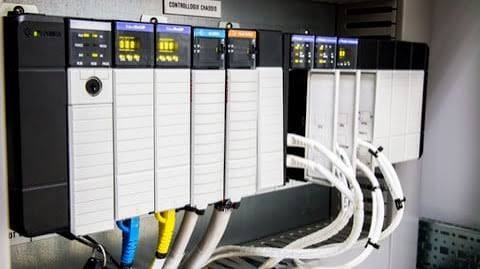
- Practical Methodology: Training sessions emphasize practical application, ensuring every student gains confidence working with industrial hardware setups.
- Experienced Mentors: Learn directly from seasoned automation engineers and software developers who bring years of field experience into the classroom.
- Holistic Tech Ecosystem: Alongside industrial automation, The Core Systems offers advanced training in Python, Data Science, Full-Stack Web Development, IoT, IIoT, AWS Cloud Computing, Cyber Security, and Linux, creating well-rounded multidisciplinary engineers.
Career Opportunities and Industry Demand
The manufacturing and production sectors are actively seeking skilled engineers who understand both traditional control systems and modern digital integration. Completing a recognized PLC programming course in India unlocks diverse career paths.
Prominent Job Roles
- Automation Engineer: Designing, programming, and testing automated production lines.
- PLC Programmer / Integrator: Writing clean, efficient control logic for specialized industrial machinery.
- Maintenance and Control Specialist: Diagnosing and resolving electrical and logical faults in operational plants.
- IIoT Solutions Architect: Bridging factory-floor hardware with cloud-based analytics platforms.
Target Industries Hiring Automation Talent
- Automotive Manufacturing: Assembly lines, robotic welding cells, and paint shops.
- Pharmaceuticals: Batch processing plants requiring strict quality control and sanitary automation.
- Food and Beverage: High-speed packaging, bottling, and sorting facilities.
- Energy and Utilities: Water treatment plants, power generation stations, and smart grid distribution networks.
What is the primary objective of a PLC programming course in India?
Do I need a background in electronics to learn PLC programming?
Which programming language is most commonly taught in a PLC course?
How does a PLC programming course help career growth?
[whatsapp_btn]
Contact Us