Master Industrial Automation: The Ultimate PLC Programming Course in Chandigarh
Introduction to Industrial Automation and Modern Manufacturing
Industrial automation has completely revolutionized how modern factories operate, transforming traditional assembly lines into smart, connected ecosystems. At the heart of this digital transformation lies the Programmable Logic Controller (PLC). If you are looking to build a thriving career in engineering, manufacturing, or smart factory technologies, enrolling in a professional PLC programming course in Chandigarh is your gateway to success.
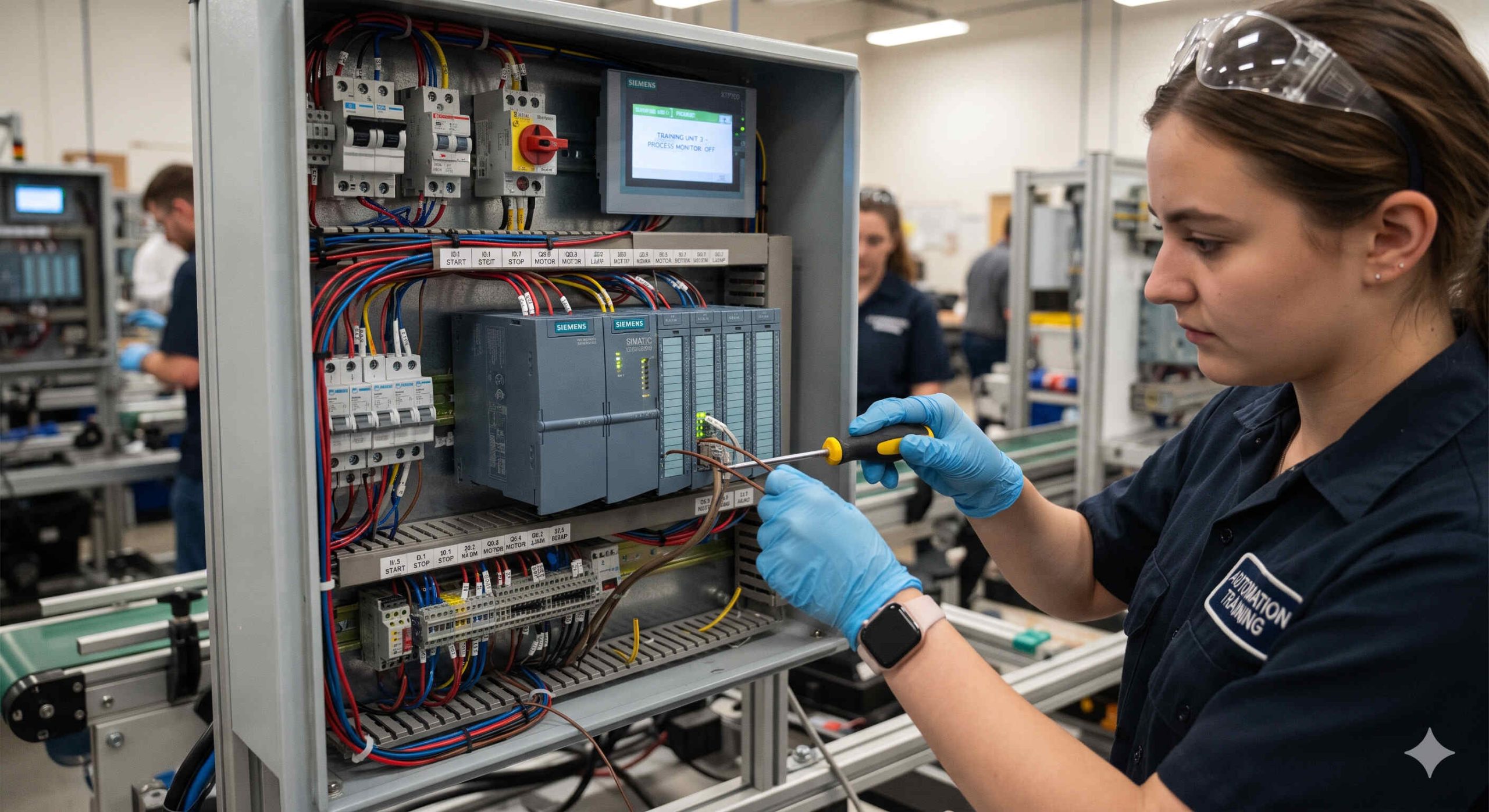
Modern production units across the globe rely heavily on automated systems to maximize output, reduce human error, and guarantee precision. Whether it is a bottling plant in Punjab, an automotive component manufacturer in Haryana, or a heavy fabrication unit, PLCs act as the digital brains controlling machinery, sensors, and actuators. By mastering PLC programming, engineers step into a high-demand domain where hardware and software converge to shape the future of industrial technology.
What is a PLC and Why is It Crucial for Industrial Automation?
A Programmable Logic Controller is an industrial digital computer ruggedized and adapted for the control of manufacturing processes, such as assembly lines, robotic devices, or any activity that requires high reliability and ease of programming and process fault diagnosis.
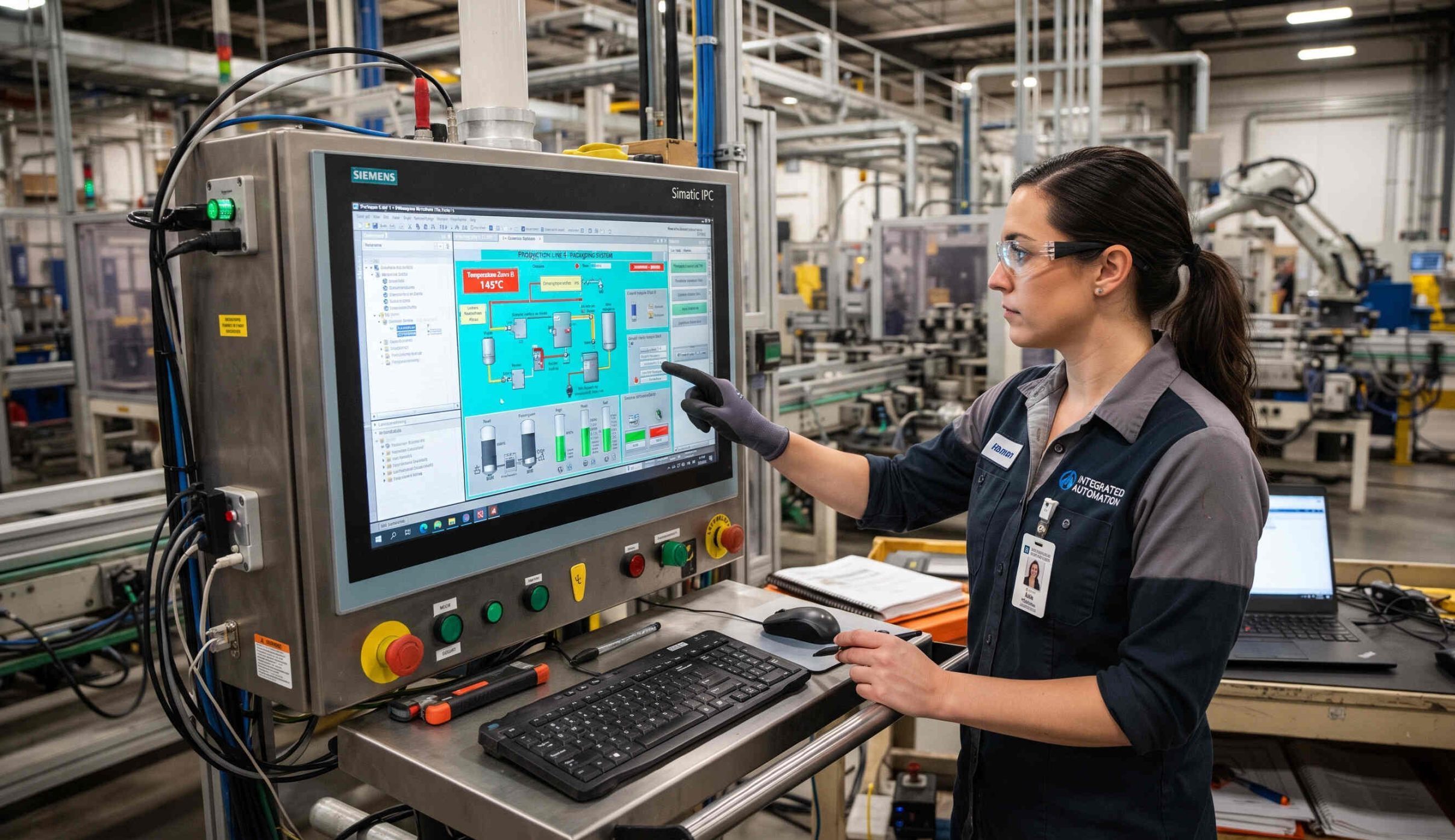
Unlike standard desktop computers, PLCs are built to withstand harsh industrial environments characterized by extreme temperatures, vibrations, humidity, and electrical noise. They continuously monitor input signals from various sensors and switches, make logical decisions based on a stored user program, and manipulate output control elements such as relays, motors, valves, and solenoids. Understanding these core mechanics is the foundational step taught in any comprehensive PLC programming course today.
The Evolution from Hardwired Relays to Smart Controllers
- Traditional Relay Panels: Early industrial systems used thousands of electromechanical relays and miles of physical copper wiring. Any change in logic required complete rewiring, leading to massive downtime and high maintenance costs.
- Introduction of Early PLCs: Invented in the late 1960s, the first programmable controllers replaced hardwired panels with solid-state electronics and reprogrammable memory, drastically reducing cabinet size and changeover times.
- Modern Networked PLCs: Today’s controllers integrate seamlessly with Industrial IoT (IIoT), cloud monitoring platforms, and advanced SCADA systems, offering real-time data analytics and remote troubleshooting capabilities.
Core Pillars of Our Training at The Core Systems
At The Core Systems, we pride ourselves on being a premier Software Development and AI-driven training organization based in the Chandigarh and Mohali region. We specialize in bridging the massive gap between traditional academic curricula and modern industrial demands. Our specialized training programs are meticulously designed for university students, fresh graduates, and working industry professionals looking to upgrade their technical skill sets.
Bridging Academia and Industry Requirements
Traditional engineering education often focuses heavily on theoretical concepts without providing adequate hands-on exposure to live industrial hardware and software environments. Our training methodology flips this model. We immerse learners in practical, project-based scenarios that mirror actual factory floors found throughout Punjab, Haryana, and neighboring industrial hubs.
Comprehensive Technological Ecosystem
While mastering a PLC programming course is central to your learning journey, industrial automation does not exist in a vacuum. At our facility, learners benefit from an interconnected curriculum that spans multiple cutting-edge domains:
- Artificial Intelligence and Data Analytics: Understanding how machine learning algorithms optimize predictive maintenance and reduce unexpected machine downtime.
- Embedded Systems and IoT: Integrating microcontrollers with industrial sensors to create smart, connected hardware nodes.
- Python Programming and Cloud Computing: Building scalable applications to process large streams of industrial telemetry data.
Detailed Curriculum of the PLC Programming Course in Chandigarh
Our structured curriculum ensures that every participant moves logically from fundamental electrical concepts to advanced industrial networking. Below is an exhaustive breakdown of the modules covered in our premier PLC programming course in Chandigarh.
1. Fundamentals of Industrial Electricity and Control Panels
- Understanding basic electrical circuits, AC/DC power supplies, relays, contactors, push buttons, and pilot lights.
- Safety standards, grounding techniques, and wiring best practices for industrial control enclosures.
- Reading and interpreting electrical schematics, piping and instrumentation diagrams (P&ID), and logic flowcharts.
2. PLC Hardware Architecture and Input/Output Modules
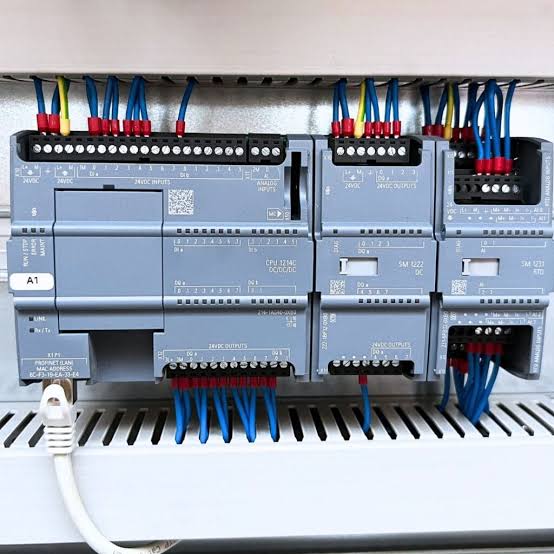
- Deep dive into the internal architecture of a PLC: Central Processing Unit (CPU), memory types (RAM, ROM, EEPROM), and power supply units.
- Differentiating between discrete (digital) inputs/outputs and analog inputs/outputs (voltage and current loops).
- Interfacing sensors (inductive, capacitive, optical) and actuators with controller terminals safely.
3. Programming Languages and IEC 61131-3 Standards
- Comprehensive mastery of Ladder Diagram (LD), the most widely used graphical programming language in the industry.
- Introduction to structured text (ST), function block diagrams (FBD), and instruction lists for complex mathematical computations.
- Understanding scan cycles: input scanning, program execution, and output refreshing.
4. Essential Instructions and Logic Operations
- Basic bit logic instructions: Examine If Open (XIO), Examine If Closed (XIC), and Output Energize (OTE).
- Timer instructions: On-Delay Timers (TON), Off-Delay Timers (TOF), and Retentive Timers (RTO).
- Counter instructions: Up-Counters (CTU), Down-Counters (CTD), and reset operations.
5. Advanced Programming Concepts and Data Manipulation
- Comparison instructions (Equal, Not Equal, Greater Than, Less Than) and data movement operations (MOV, COP).
- Mathematical operations: Addition, subtraction, multiplication, division, and square root calculations.
- Subroutines, jump instructions, and structured program organization for large-scale industrial projects.
6. Human-Machine Interface (HMI) Design and Integration
- Introduction to HMI hardware, touch screen navigation, and operator interface development.
- Designing intuitive mimic screens, real-time alarm banners, trending graphs, and historical data logs.
- Linking HMI tag databases directly with PLC memory addresses for seamless control and monitoring.
7. Supervisory Control and Data Acquisition (SCADA) Systems
- Understanding enterprise-level data collection and supervisory control architecture.
- Developing server-client communication links, database connectivity, and remote plant visualization dashboards.
- Security access levels, user authentication, and audit trail management in industrial environments.
8. Industrial Communication Protocols and Networking
- Exploring standard industrial communication networks: Modbus, Profibus, Ethernet/IP, and CANopen.
- Master-slave configurations, token passing, and troubleshooting communication packet drops in noisy factory floors.
- Connecting local automation cells to broader manufacturing execution systems (MES).
9. Industrial Troubleshooting, Maintenance, and Safety
- Diagnosing hardware faults, faulty sensor loops, and wiring discontinuities using diagnostic software tools.
- Online editing, forcing bits, monitoring power flows, and tracking down logic faults during active production runs.
- Implementing emergency stop circuits, safety relays, and interlocks to comply with international industrial safety norms.
- Industry Applications: Where PLC Programming Powers Modern Manufacturing
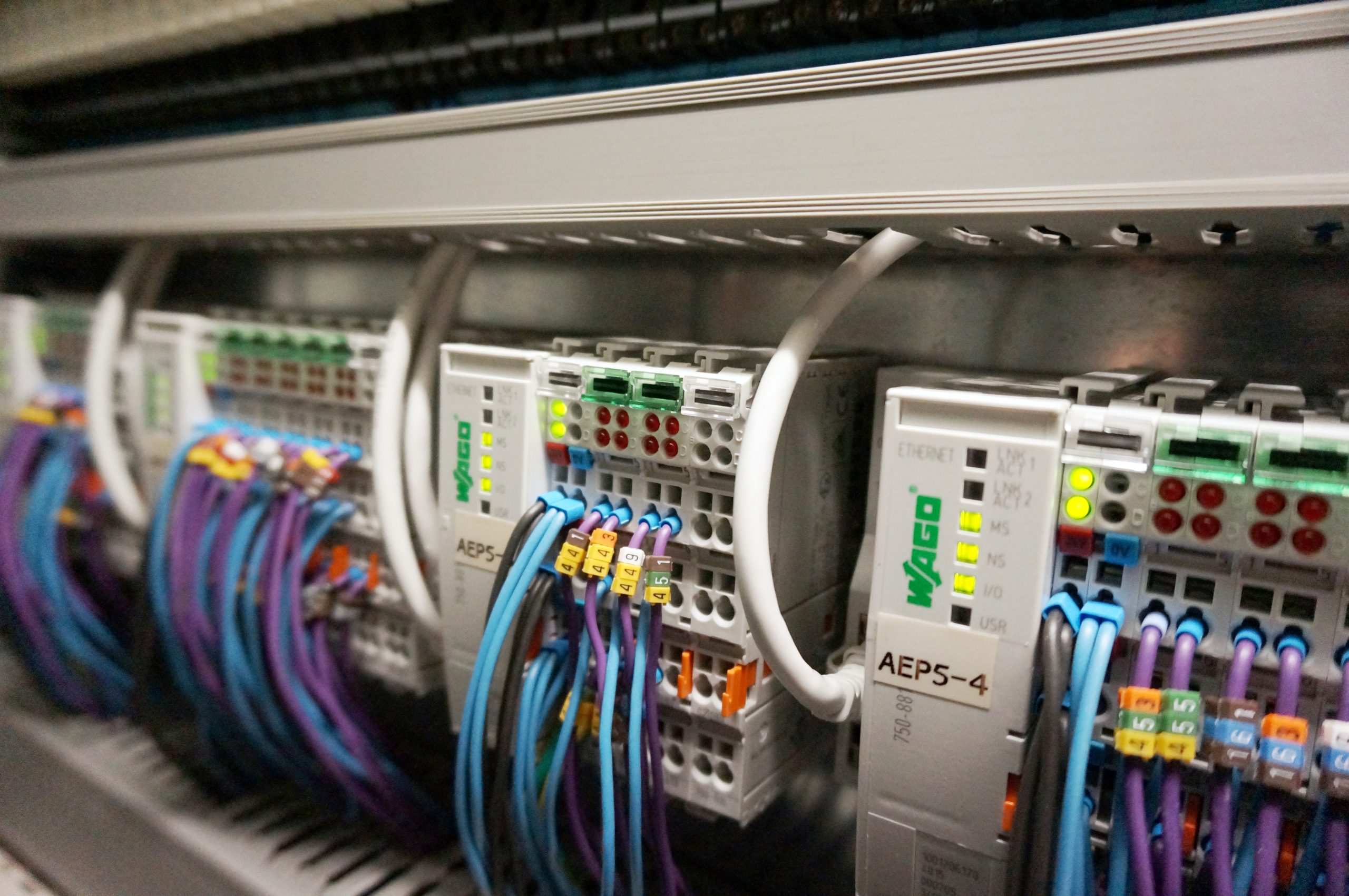
The practical applications of completing a professional PLC programming course in Chandigarh extend across a diverse range of industrial sectors. Automation is no longer confined to heavy automotive plants; it drives efficiency across multiple verticals.
- Food & Beverage: Focuses on bottling, mixing, and automated packaging lines, utilizing PLC and HMI systems for precise timing control of filling valves and high-speed sorting.
- Pharmaceuticals: Involves batch processing, sterilization, and tablet compression, relying on systems to provide strict recipe management, batch tracking, and audit logging.
- Automotive: Powers robotic welding, body shop assembly, and conveyor systems through interlocking safety zones and synchronized multi-axis motion control.
- Water Treatment: Manages filtration plants, sewage pumping, and chemical dosing, using controllers for continuous monitoring of tank levels, flow rates, and automated valve actuation.
- Material Handling: Controls automated warehousing, sorting belts, and crane operations by tracking inventory movement, integrating barcode scanners, and managing routing.
Why Choose The Core Systems for Your Career Growth?
Selecting the right training institute is the most critical decision in your professional journey. At The Core Systems, our commitment extends far beyond simple classroom lectures. We focus on transforming ambitious learners into confident, industry-ready engineering professionals.
1. Experienced Mentors and Industry Practitioners
Our training programs are led by seasoned automation engineers and software architects who bring years of actual factory-floor and corporate project experience into the classroom. They share practical troubleshooting tips, industry best practices, and real-world case studies that textbooks simply cannot provide.
2. State-of-the-Art Laboratory Infrastructure
We believe in experiential learning. Our labs are equipped with standard industrial training kits featuring modern programmable logic controllers, touch-screen HMI panels, pneumatics kits, sensor arrays, and simulation software. This ensures that every student gets ample hands-on practice writing, testing, and debugging real control code.
3. Comprehensive Placement Support and Career Guidance
Navigating the job market can be challenging. Our dedicated placement cell provides comprehensive career support, including resume-building workshops, technical interview preparation, mock testing sessions, and direct interview coordination with leading manufacturing firms, system integrators, and software development companies across Chandigarh, Mohali, Punjab, Haryana, and beyond.
4. Holistic Multidisciplinary Training Approach
Industrial automation today intersects heavily with software development, cloud technologies, and artificial intelligence. By training at our facility, students gain exposure to complementary technologies such as Python, AWS cloud computing, and IoT integration, making them exceptionally versatile candidates in the modern job market.
What is the eligibility criterion to enroll in a PLC programming course in Chandigarh?
How does The Core Systems assist with job placements after the course?
Can working professionals attend this training program?
What is the typical duration of the training program?
Contact Us