Mastering Automation: Your Complete Path to Industrial Excellence Through a PLC Programming Course in Mohali
The landscape of modern manufacturing, smart factories, and industrial automation is undergoing a massive transformation. As industries transition toward Industry 4.0, the demand for skilled professionals who can design, program, and maintain automated systems has skyrocketed. At the heart of this industrial revolution lies Programmable Logic Controller (PLC) technology. Whether you are an aspiring engineer, a working professional looking to upskill, or a university student aiming to bridge the gap between academics and industry standards, enrolling in a specialized PLC programming Course in Mohali is your gateway to a rewarding career.
Industrial automation is no longer a futuristic concept; it is the current operational standard across automotive plants, pharmaceutical manufacturing, food processing units, and energy sectors. By mastering PLC Programming Mohali training programs, engineers gain the capability to control complex machinery with precision, minimize human error, and optimize production lines. This comprehensive overview explores why industrial automation matters, what you will learn, and how partnering with an industry leader can shape your professional future.
[whatsapp_btn]
The Rise of Industrial Automation and PLC Technology
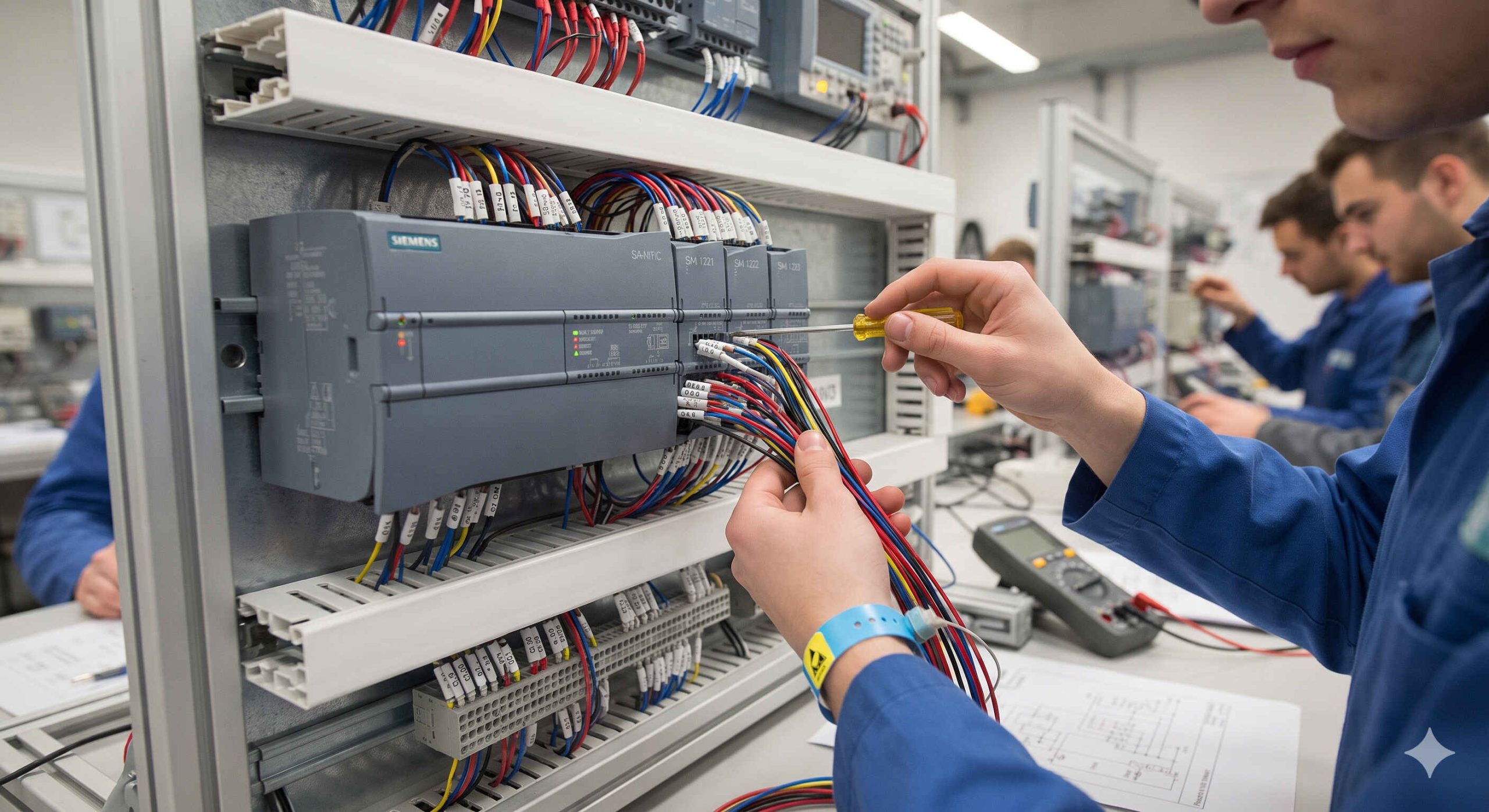
Modern factories rely heavily on continuous, error-free operations. Traditional relay-based control systems are cumbersome, difficult to troubleshoot, and expensive to modify when production requirements change. The introduction of the Programmable Logic Controller revolutionized manufacturing by replacing physical wiring with flexible, software-based logic.
Why PLCs Drive Modern Manufacturing
-
Reliability and Durability: Solid-state components allow PLCs to operate seamlessly in harsh industrial environments characterized by extreme temperatures, vibrations, and electrical noise.
-
Flexibility and Scalability: Modifying a control sequence requires updating the program rather than rewiring physical control panels, saving valuable time and capital.
-
Rapid Fault Diagnostics: Advanced diagnostic tools built into modern control systems allow technicians to pinpoint errors instantly, drastically reducing costly factory downtime.
Organizations across Punjab and northern India are rapidly upgrading their infrastructure to stay competitive globally. Consequently, mastering core automation concepts through a structured PLC programming Course in Mohali provides individuals with the technical edge required to thrive in competitive job markets.
Understanding the Core Architecture of PLCs
Before writing complex automation routines, students must understand the hardware and software architecture that makes PLCs function. A standard PLC system comprises a central processing unit (CPU), memory storage, power supply modules, and input/output (I/O) interfaces that connect the controller to field devices.
Inputs and Outputs: The Senses of Automation
-
Discrete Inputs: Pushbuttons, limit switches, and proximity sensors that provide binary (on/off) signals to the controller.
-
Analog Inputs: Temperature transmitters, pressure gauges, and flow meters that supply continuous variable signals representing physical measurements.
-
Discrete Outputs: Solenoid valves, indicator lights, and relay coils activated by the processor to control physical equipment.
-
Analog Outputs: Variable frequency drives (VFDs) and control valves adjusted incrementally to regulate speed, flow, or temperature.
Understanding these foundational hardware components during your PLC Programming Mohali training ensures you can design safe, efficient control loops for any industrial application.
[whatsapp_btn]
Programming Languages and Logic Structures
IEC 61131-3 standards define multiple programming languages used in industrial automation. A robust educational program introduces students to these standardized formats to ensure versatility across different hardware brands.
Common PLC Programming Languages
-
Ladder Diagram (LD): A graphical language resembling electrical relay schematic diagrams, making it the most intuitive choice for beginners.
-
Structured Text (ST): A high-level, text-based language ideal for complex mathematical calculations and advanced data manipulation.
-
Function Block Diagram (FBD): A graphical language that allows programmers to link reusable software blocks together for systematic process control.
-
Sequential Function Chart (SFC): Perfect for managing step-by-step batch processes and sequential manufacturing operations.
By exploring these languages during a dedicated PLC programming Course in Mohali, learners build the capability to translate complex engineering specifications into clean, executable automation code.
Bridging Academia and Industry: The Core Systems Advantage
The transition from a university classroom to a live manufacturing floor can be daunting. Theoretical knowledge alone is often insufficient when facing real-world industrial challenges. This is where specialized training providers make all the difference.
At The Core Systems, we pride ourselves on being a premier Software Development and AI-driven organization based in the Chandigarh and Mohali region. We specialize in delivering advanced technical training across diverse domains, including Artificial Intelligence, Data Science, Full-Stack Web Development, IoT, Industrial IoT (IIoT), Embedded Systems, Python, AWS Cloud Computing, Cyber Security, Linux, and PLC Programming Mohali courses.
Our core mission is to empower university students and industry professionals with practical, job-ready skills. By combining rigorous theoretical instruction with hands-on project execution, we ensure our trainees understand not just how systems work, but why they are engineered that way.
Comprehensive Curriculum of a Professional PLC Training Program
A world-class training curriculum must cover everything from foundational relay logic to advanced supervisory control and data acquisition (SCADA) integration.
- Module 1: Fundamentals — Covers electrical safety, sensors, actuators, and numbering systems, with practical application in wiring physical inputs and outputs to a controller.
- Module 2: Ladder Logic — Focuses on timers, counters, internal relays, and arithmetic instructions, applied through writing basic start/stop and sequencing interlocks.
- Module 3: Advanced Control — Explores PID loops, analog scaling, and high-speed counters, utilized for regulating tank fluid levels and motor speeds precisely.
- Module 4: HMI Integration — Involves screen design, alarm banners, push buttons, and numeric displays, practical for creating operator interfaces for real-time monitoring.
- Module 5: Industrial Networks — Teaches Modbus, Profibus, and Ethernet/IP communication protocols to handle linking multiple controllers and supervisory stations.
Engaging with a comprehensive PLC programming Course in Mohali ensures that you gain hands-on proficiency across every single one of these critical operational tiers.
The Role of HMI and SCADA in Industrial Automation
While PLCs execute the logic at the machine level, human operators need intuitive ways to monitor and interact with large industrial plants. This is achieved through Human-Machine Interfaces (HMIs) and Supervisory Control and Data Acquisition (SCADA) systems.
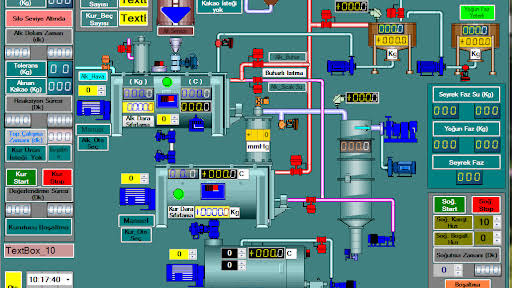
- Human-Machine Interfaces (HMIs): Touchscreen panels mounted on machinery enclosures that display operational status, alarm messages, and parameter setpoints.
- SCADA Systems: Enterprise-level software packages that gather real-time data from multiple PLCs across a sprawling factory floor, presenting trends, historical logs, and remote control capabilities to plant managers.
Mastering HMI screen design and SCADA configuration during your PLC Programming Mohali coursework elevates your profile from a basic programmer to a complete system integrator capable of managing end-to-end industrial projects.
[whatsapp_btn]
Industry 4.0 and the Future of Smart Manufacturing
Traditional automation is rapidly evolving into Smart Manufacturing, driven by the Industrial Internet of Things (IIoT), cloud computing, and artificial intelligence. Modern PLCs are no longer isolated island controllers; they act as intelligent edge devices that stream operational data directly to cloud dashboards for predictive maintenance and machine learning analysis.
Key Technological Drivers in Modern Plants
- Predictive Maintenance: Analyzing vibration and temperature trends to service equipment before unexpected failures occur.
- Edge Computing: Processing critical safety logic locally on the PLC while offloading heavy data logging to cloud platforms.
- AI Integration: Utilizing machine learning algorithms to optimize production speeds and minimize raw material waste dynamically.
As industries across Punjab, Haryana, Chandigarh, and surrounding industrial hubs adopt these smart technologies, professionals trained in a forward-thinking PLC programming Course in Mohali will find themselves at the forefront of career advancement.
Career Opportunities and Industry Demand
Industrial automation professionals enjoy diverse career pathways spanning multiple engineering disciplines. Manufacturing plants, system integration firms, water treatment facilities, and packaging industries actively seek qualified talent.
Popular Job Roles for Automation Engineers
- PLC Automation Engineer: Responsible for writing, testing, and commissioning control software for industrial machinery.
- Controls System Integrator: Focuses on merging PLCs, HMIs, drives, and instrumentation into a cohesive, functioning plant architecture.
- Maintenance and Troubleshooting Specialist: Diagnoses electrical and programmatic faults on live production floors to minimize costly downtime.
- IIoT Solutions Architect: Designs connected factory ecosystems linking edge controllers with enterprise cloud software.
Securing a recognized certification through a trusted PLC programming Course in Mohali validates your expertise to recruiters and hiring managers looking for proven technical competence.
Why Choose The Core Systems for Your Training?
Selecting the right training partner dictates the quality of your learning experience and your subsequent career trajectory. The Core Systems stands apart through our commitment to excellence, real-world project exposure, and expert mentorship.
- Industry-Experienced Mentors: Learn directly from seasoned engineers who have spent years deploying automation and software solutions across industrial sectors.
- State-of-the-Art Infrastructure: Gain practical exposure using industry-standard software simulation tools and hardware setups.
- Holistic Skill Development: Beyond technical training, we offer guidance on resume building, interview preparation, and professional portfolio development.
- Regional Industry Connections: Our deep roots across Chandigarh, Mohali, Punjab, and Haryana enable us to connect talented trainees with top-tier technology and manufacturing firms.
Whether you are aiming to master PLC Programming Mohali or expand your expertise into Python, IoT, and AWS cloud computing, our programs are structured to deliver measurable professional growth.
Essential Best Practices for Aspiring Automation Engineers
Excelling in industrial automation requires more than just memorizing software commands. Developing a disciplined engineering mindset ensures safe, reliable, and maintainable system designs.
- Prioritize Safety Protocols: Always incorporate hardware emergency stops, safety relays, and software interlocks to protect human operators and prevent equipment damage.
- Comment Your Code: Clear documentation within your ladder logic or structured text makes future troubleshooting and system upgrades significantly easier for your team.
- Test in Simulation: Use software simulation environments to validate your control logic thoroughly before downloading code to physical hardware.
- Stay Updated with Technology: Automation standards evolve continuously; dedicate time to learning emerging communication protocols and IIoT integration techniques.
What is the primary objective of a PLC programming Course in Mohali?
Who is eligible to enroll in a PLC programming training program?
Do I need prior programming experience before joining PLC Programming Mohali courses?
How does The Core Systems support career placement after training?
[whatsapp_btn]
Contact Us