PLC Automation course in Baddi: Engineering Blueprint
A PLC Automation course in Baddi is an intensive technical program. It teaches industrial programmable logic controllers, SCADA systems, human-machine interfaces, and field instrumentation. The program equips students and working professionals with hands-on ladder logic programming. It builds real-world industrial troubleshooting skills to secure high-paying automation engineering roles in manufacturing hubs.

Modern manufacturing plants run on high-speed automation. Industrial floors require robust control loops, zero downtime, and precise instrumentation. Any major factory unit in Himachal Pradesh features automated conveyor belts, robotic arms, and complex bottling lines. Unseen electronic brains manage all these systems.
Engineers who understand these systems enjoy massive demand. Completing a structured PLC Automation course in Baddi gives you exact practical skills. You learn to design, program, and maintain these high-tech production environments. Let us break down the core architectural blueprint of industrial automation and explore how you can master it.
Core Architecture & Component Interconnects for PLC Automation course in Baddi
Industrial automation relies on a strict hierarchical structure. People often call this structure the automation pyramid. Field devices sit at the foundation level to interact with physical processes. Sensors measure temperature, pressure, and flow rates here. Actuators like motors and pneumatic valves execute physical commands.
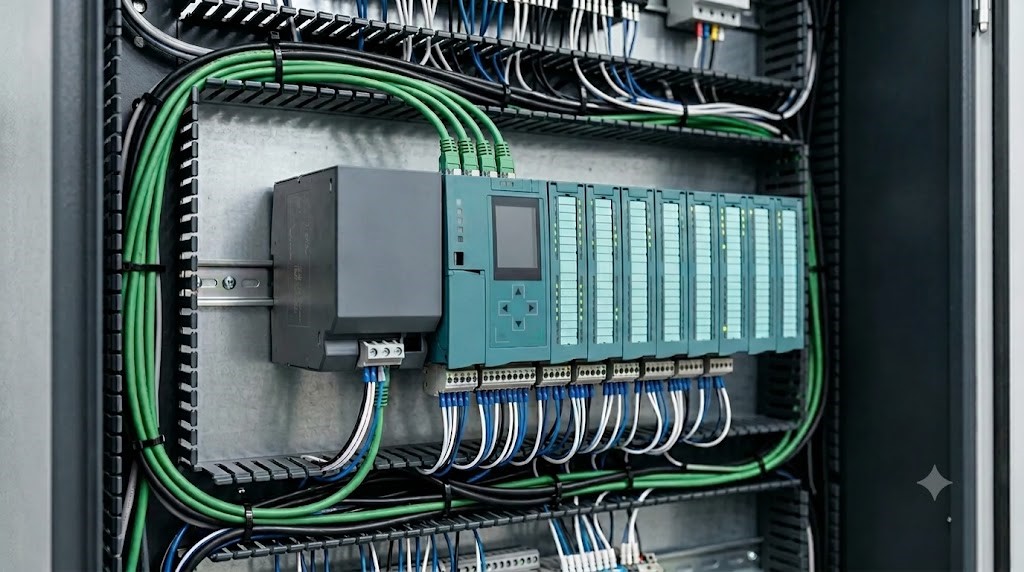
Signals from field devices travel via copper wires or industrial fieldbuses. They move up to the control level. Programmable logic controllers act as the ruggedized central processing units of the factory floor. They execute control routines scan-by-scan. They process digital and analog inputs to generate precise output commands.
A comprehensive PLC course in Baddi teaches you how these hardware layers communicate. You learn about current loops, sinking and sourcing configurations, and digital input/output module wiring. You cannot write software logic successfully without mastering this hardware foundation.
The supervisory control and data acquisition level sits above the PLC layer. SCADA systems aggregate operational data from multiple controllers across the plant floor. They present this data on intuitive operator dashboards. This setup enables real-time monitoring and alarm management.
Professionals often seek specialized training to meet regional industrial requirements. They enroll in a dedicated PLC scada course in Baddi Himachal Pradesh. Mastering both hardware programming and supervisory software allows you to handle end-to-end plant integration effortlessly.
Step-by-Step Implementation Blueprint
Building a robust automation system requires a disciplined engineering workflow. You might automate a pharmaceutical plant in the industrial belt or a nearby packaging unit. Following a proven implementation pipeline prevents costly downtime and logic errors.
Top-tier technical programs teach a standard 5-step engineering workflow:
- Step 1: Functional Specification & I/O Mapping: Define exact plant requirements. Count digital and analog input and output points. Allocate memory addresses.
- Step 2: Hardware Selection: Choose the appropriate controller family, power supply modules, communication cards, and HMI touch panels based on environmental constraints.
- Step 3: Logic Development & Simulation: Write structured ladder logic or function block diagrams. Test control routines using software simulators before you touch live hardware.
- Step 4: Network Configuration & HMI Design: Set up industrial communication protocols like Modbus, Profibus, or Industrial Ethernet. Build animated operator screens for clear visualization.
- Step 5: Commissioning & Validation: Download the program to the physical PLC. Perform dry runs, verify safety interlocks, and hand over the system to operations.
Students in a professional PLC Automation Training in Baddi practice these exact steps. They use real industrial training kits. Gaining familiarity with popular software suites from Siemens, Rockwell, and Schneider Electric bridges the gap between textbook theory and factory floor reality.
Why Choose PLC Automation Course in Baddi?
Baddi is one of North India’s largest industrial zones. It hosts pharmaceutical, manufacturing, packaging, FMCG, and electronics industries. This makes it the perfect place to pursue PLC automation training in Baddi.
PLC vs. Relay Logic: Comparative Analysis
Programmable controllers transformed manufacturing. Before their arrival, factories relied entirely on hardwired electromechanical relays. Understanding why modern industries abandoned relay logic highlights the immense value of learning PLC programming.
- Wiring Complexity: Traditional relay logic features extremely high wiring complexity. It is prone to loose connections and wire fatigue. Modern PLC automation keeps wiring low because internal software logic replaces physical jumper wires.
- Flexibility & Changes: Relay circuits require manual rewiring, which causes significant downtime. PLCs offer instant modifications via software updates and programming downloads.
- Troubleshooting Time: Technicians spend hours or days testing individual physical relays with a multimeter in relay systems. PLCs allow troubleshooting in minutes using software diagnostics, forced bits, and error logs.
- Reliability & Lifespan: Mechanical relay contacts wear out rapidly under heavy arc loads. PLCs utilize high-reliability, solid-state electronic components with millions of operating cycles.
- Data Logging & Analytics: Traditional panels make data logging impossible without auxiliary electromechanical counters and timers. PLCs feature advanced, seamless integration with SCADA, cloud, and IIoT platforms.
Recent industrial manufacturing benchmarks reveal impressive data. Plants upgrading from legacy relay panels to modern programmable controllers experience up to a 78% reduction in unplanned maintenance downtime. They also gain a 3.4x boost in overall equipment effectiveness (OEE). This dramatic performance jump explains why manufacturing clusters actively recruit certified automation engineers.
Production Deployment & Configuration Checklist
Deploying code to a live industrial controller creates an adrenaline rush. One misplaced timer or unhandled emergency stop condition can damage expensive machinery. Professional engineers follow strict pre-deployment checklists to guarantee safety and reliability.
First, verify your grounding and surge protection. Electrical noise from large induction motors can corrupt communication packets. It can also trigger false sensor readings. Always use shielded twisted-pair cables for analog signals. Keep low-voltage communication lines separated from high-voltage power conduits.
Next, configure your communication parameters carefully. Ensure IP addresses, baud rates, and station IDs match across all PLCs, HMIs, and SCADA servers. Refer to the Official International Electrotechnical Commission Documentation. It provides global standards on programmable controller programming languages and safety guidelines.
Key Takeaway: Always implement hardware-level emergency stop circuits. They must physically cut power to actuators independently of the PLC software. Never rely solely on software bits for critical personnel safety functions.
You can explore local options if you want a nearby classroom. Finding a Practical PLC course in Nalagarh and Baddi or a specialized technical academy can set you on the right path. Learners from neighboring industrial zones often travel to regional technology hubs to access advanced hardware labs.

Real-World Case Study: Automated Packaging Line Integration
Let us examine a real-world automation project to see these concepts in action. Engineers deployed this project in a high-speed pharmaceutical packaging facility. The plant faced a major bottleneck. Their legacy sorting line jammed frequently, which led to a meager 62% packaging efficiency.
The engineering team took on a complete system overhaul. They designed a new architecture. It featured a modular PLC connected to optical color sensors, pneumatic diverters, and a centralized SCADA monitoring station. They programmed the logic using structured text and ladder diagrams to handle high-speed product sorting.
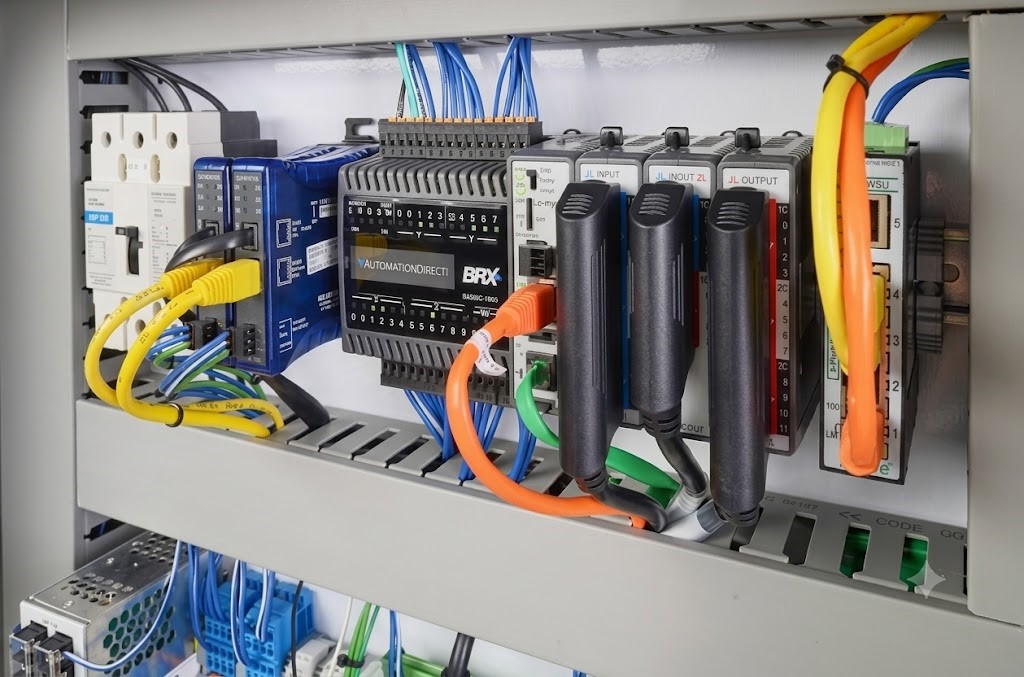
The project unfolded through these key phases:
- Phase 1: Installed photoelectric sensors at the intake conveyor to measure box dimensions and weight dynamically.
- Phase 2: Programmed high-speed counter blocks inside the PLC to track items passing at a rate of 120 units per minute.
- Phase 3: Integrated a touch-panel HMI. This screen allows operators to change batch recipes and view live error diagnostics instantly.
- Phase 4: Connected the controller to a plant-wide SCADA database for real-time yield tracking and preventive maintenance alerts.
After commissioning, the packaging plant transformed immediately. Sorting errors dropped by 91%. Overall line efficiency surged to 94.5%. This project shows why hands-on training that covers real hardware integration remains invaluable for modern engineers.
Accelerating Your Career in Industrial Automation
The manufacturing sector across northern India is expanding rapidly. Industrial corridors near Chandigarh, Mohali, and surrounding manufacturing zones require skilled talent. Companies need engineers capable of handling smart factories, industrial IoT, and advanced control systems.
Regional training initiatives provide foundational exposure. However, pairing your industrial automation skills with complementary software expertise creates an unbeatable career profile. Organizations like The Core Systems offer comprehensive multidisciplinary training programs. These programs span industrial automation, embedded systems, Python programming, AI, and full-stack development across their centers in Chandigarh, Mohali, Punjab, and Haryana.
Our certification adds credibility and strengthens your resume after completing PLC Automation Training in Baddi.
What is the eligibility for PLC Automation Training in Baddi?
Is PLC Automation Training near me in Baddi suitable for beginners?
Does TheCoreSystems provide placement support?
What tools are covered in PLC training?
What is the duration of PLC Automation Training in Baddi?
Is certification provided?
What is the average salary after PLC training?
Can I join if I am searching for PLC Automation Training near me in Baddi as a working professional?
Mastering traditional PLC programming and modern digital technologies positions you at the cutting edge of Industry 4.0. You might be a fresh engineering graduate or an experienced technician looking to upskill. Enrolling in a dedicated PLC Automation course in Baddi is your gateway to a rewarding and future-proof career.
Take charge of your professional journey today. Set up your lab bench, write your first ladder logic routine, and step confidently onto the smart factory floor.