Master the Future of Industrial Automation: The Ultimate Guide to the Best PLC Automation Course in Ambala
The industrial landscape is undergoing a massive transformation. Traditional factories are rapidly evolving into smart, connected ecosystems powered by automation, artificial intelligence, and the Internet of Things (IoT). At the heart of this industrial revolution lies the Programmable Logic Controller (PLC). If you are an engineering student, a recent graduate, or a working professional looking to future-proof your career, enrolling in a Best PLC Automation Course in Ambala is your gateway to high-paying, future-ready technical roles.

As industries across Punjab, Haryana, and the greater Chandigarh-Mohali region modernize their infrastructure, the demand for skilled automation engineers has skyrocketed. The Core Systems, a premier software development and technology training leader established in 2001, delivers cutting-edge programs designed to bridge the gap between academic theory and rigorous industrial reality. This comprehensive guide explores everything you need to know about mastering PLC automation, choosing the right training, and launching a lucrative career in industrial technology.
Why Industrial Automation is Transforming Modern Manufacturing
Manufacturing and process industries are no longer reliant on manual oversight and mechanical relays. Today, automated systems control everything from assembly lines in automotive plants to temperature regulation in chemical processing plants.

The Shift Toward Industry 4.0
Industry 4.0 represents the digital transformation of manufacturing. By integrating smart sensors, cloud computing, and real-time data analytics, modern factories achieve unprecedented levels of efficiency, safety, and precision. At the core of this movement are Programmable Logic Controllers (PLCs), which act as the robust industrial brains executing complex logical operations in harsh factory environments.
The Role of PLCs in Smart Factories
A PLC is a specialized industrial computer designed to withstand extreme temperatures, vibrations, and electrical noise. It continuously monitors input signals from various sensors and switches, processes this data according to a user-defined program, and activates output devices such as motors, valves, and actuators. Without PLCs, modern mass production, quality control, and automated assembly would simply be impossible.
Understanding the Landscape: Automation Course in Ambala
Ambala has emerged as a thriving educational and industrial hub in Haryana. With numerous manufacturing units, scientific instrument industries, and engineering colleges nearby, the region offers fertile ground for technical skill development.
Bridging the Skill Gap
While universities provide strong foundational knowledge in electrical, electronics, and mechanical engineering, they often lack hands-on exposure to current industrial hardware and software tools. A specialized Automation Course in Ambala fills this crucial gap. It equips learners with practical competencies in ladder logic programming, sensor integration, and troubleshooting techniques that employers actively seek.
Local Industrial Integration
Students who complete practical training locally gain a distinct advantage. Because regional industries are increasingly adopting automated machinery, local technical institutes maintain close ties with manufacturing plants, ensuring that curriculum content aligns directly with current market requirements.
What You Will Learn: Curriculum of a Comprehensive PLC Course in Ambala
A world-class PLC Course in Ambala covers a diverse array of foundational and advanced topics. Let’s break down the core modules that transform a beginner into a confident automation professional.
1. Fundamentals of Electrical and Control Systems
Before writing a single line of control logic, students must master electrical basics. This includes understanding relay logic, contactors, push buttons, timers, control panel wiring, and safety standards.
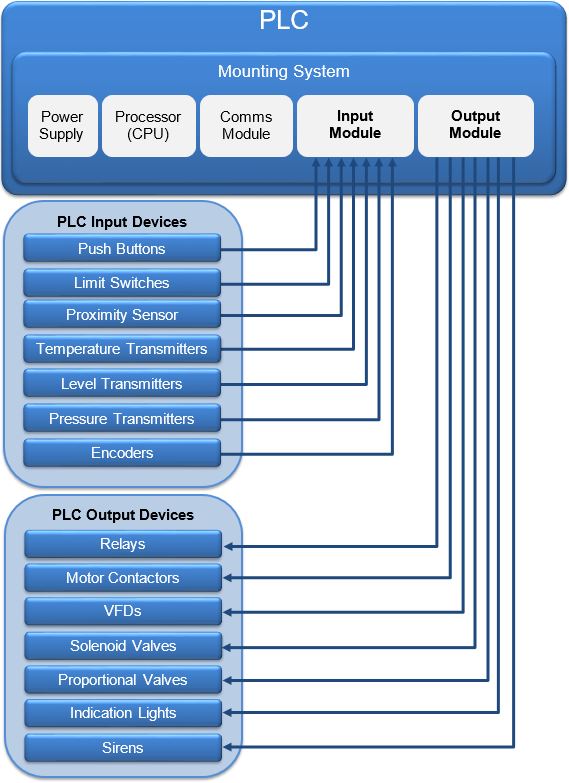
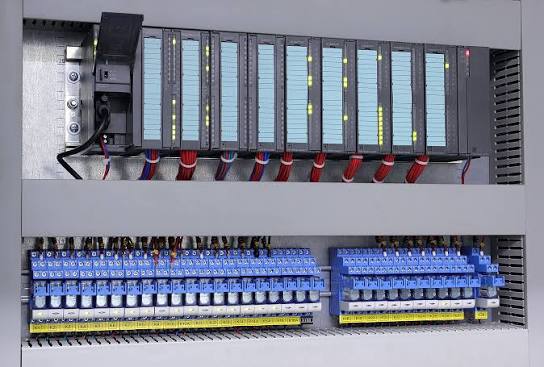
2. Introduction to PLC Hardware Architecture
Learners explore the physical components of industrial controllers, including:
-
Central Processing Unit (CPU): The brain that executes control programs.
-
Power Supply Unit: Converts AC line voltage to low-voltage DC power.
-
Input/Output (I/O) Modules: Interfaces connecting field sensors and actuators to the CPU.
-
Communication Ports: Interfaces for programming terminals and network communication.
3. Mastering Programming Languages
While Ladder Logic (LD) remains the most popular graphical programming language for PLCs due to its resemblance to electrical relay schematics, modern courses also introduce structured text and functional block diagrams.
4. Human-Machine Interface (HMI) Integration
PLCs operate behind the scenes, but operators need a clear window into the process. Students learn how to design intuitive HMI screens that display real-time system status, alarm notifications, and production metrics.
5. Supervisory Control and Data Acquisition (SCADA)
For large-scale industrial processes spanning wide geographic areas, SCADA systems aggregate data from multiple PLCs. Training covers supervisory control, trend analysis, and historical data logging.
Exploring Career Opportunities After a PLC Automation Course
Completing a professional PLC Automation Course in Ambala unlocks a vast spectrum of career paths across diverse engineering sectors.
Emerging Job Roles for Automation Engineers
-
PLC Programmer / Developer: Designs, tests, and deploys control logic for automated machinery.
-
Automation Maintenance Engineer: Troubleshoots and repairs hardware and software faults on the factory floor.
-
SCADA / HMI Specialist: Develops user interfaces and supervisory monitoring networks.
-
Commissioning Engineer: Travels to client sites to install, test, and sign off on new automated production lines.
Salary Expectations and Growth Trajectory
Entry-level automation professionals enjoy competitive starting salaries, which scale rapidly as they gain hands-on experience with complex industrial networks. Professionals skilled in both traditional PLC systems and modern IoT-driven IIoT platforms command the highest compensation packages.
Traditional Automation vs. Modern Smart Automation
To understand where the industry is heading, it helps to compare traditional standalone relay systems with modern, networked automation ecosystems.
| Feature | Traditional Relay Logic | Modern PLC & Smart Automation |
| Flexibility | Rigid; requires physical rewiring for logic changes. | Highly flexible; requires simple software program updates. |
| Reliability | Mechanical parts wear out quickly; high maintenance. | Solid-state electronics; exceptionally durable and reliable. |
| Troubleshooting | Time-consuming physical tracing of wires. | Rapid diagnostic tools via software monitoring screens. |
| Connectivity | Isolated; limited to local switches and indicators. | Networked via Industrial Ethernet, IoT, and cloud platforms. |
| Data Analytics | None; zero visibility into historical performance metrics. | Advanced data logging, predictive maintenance, and real-time analytics. |
Why Choose The Core Systems for Your Technical Training?
Established in 2001, The Core Systems has built an enduring reputation as a premier software development and technology training organization. Operating across Chandigarh, Mohali, Punjab, Haryana, and nearby regions, the company delivers industry-aligned education for both university students and working professionals.
Comprehensive Technological Expertise
Beyond industrial automation, The Core Systems offers advanced training across a diverse portfolio of cutting-edge domains:
-
Artificial Intelligence & Data Science: Mastering machine learning models and intelligent data pipelines.
-
Full-Stack Web Development: Building robust applications using the MERN stack and Python with AI integration.
-
IoT and IIoT (Industrial Internet of Things): Connecting physical machinery to smart cloud networks.
-
Embedded Systems & PLC Automation: Designing microchip-based solutions and industrial control loops.
-
Cybersecurity & Linux: Securing enterprise infrastructure and mastering operating system fundamentals.
-
AWS Cloud Computing: Deploying scalable, cloud-hosted applications.
Industry-Aligned Mentorship and Project Experience
Training at The Core Systems emphasizes practical, project-based learning. Students collaborate on real-world corporate and industrial projects, gaining the exact technical confidence required by top-tier employers. Furthermore, dedicated career mentorship and placement assistance ensure that graduates successfully transition into professional roles.
Essential Skills Developed During the Training Program
Enrolling in a structured PLC Automation Course in Ambala cultivates a well-rounded skill set that extends far beyond basic programming.
-
Logical Problem Solving: Breaking down complex manufacturing workflows into sequential logical steps.
-
Safety Compliance: Understanding international safety standards for industrial machinery and electrical panels.
-
System Integration: Seamlessly connecting sensors, actuators, drives, and controllers into a unified network.
-
Analytical Troubleshooting: Quickly isolating software bugs or hardware failures to minimize costly factory downtime.
According to recent industry research by leading technology publications, the global industrial automation market continues to expand rapidly as companies prioritize digital efficiency. Read more about global manufacturing trends and smart factory advancements at [Insert link to reputable tech journal/site].
Frequently Asked Questions (FAQs)
Depending on whether you choose a fast-track professional bootcamp or a comprehensive weekend schedule, programs typically range from 2 to 6 months, incorporating both theoretical classes and practical lab sessions.How long does it take to complete the training program?
Is The Core Systems suitable for working professionals?
What software tools are taught during a standard PLC Course in Ambala?
Does The Core Systems provide placement assistance after course completion?
Contact Us