Introduction
In today’s industrial automation world, PLC Programming Ladder Logic Training has become a vital skill for engineers, technicians, and automation professionals. As manufacturing and industrial processes automate at high speeds, the demand for trained professionals capable of handling PLCs (Programmable Logic Controllers) continues to grow. Particularly, PLC Programming Ladder Logic Allen Bradley is one of the most sought‑after competencies due to its prevalence in global industries.

This guide is your complete resource to understand, practice, and master PLC programming with ladder logic—especially on Allen Bradley systems—delivered with clarity, real‑world applications, and industry‑standard knowledge.
What Is PLC Programming?
A Programmable Logic Controller (PLC) is a rugged digital computer used to automate machinery and industrial processes. PLCs replace traditional relay logic systems and allow software‑based control. PLC Programming Ladder Logic Training teaches how to create digital control programs that execute sequences of operations.
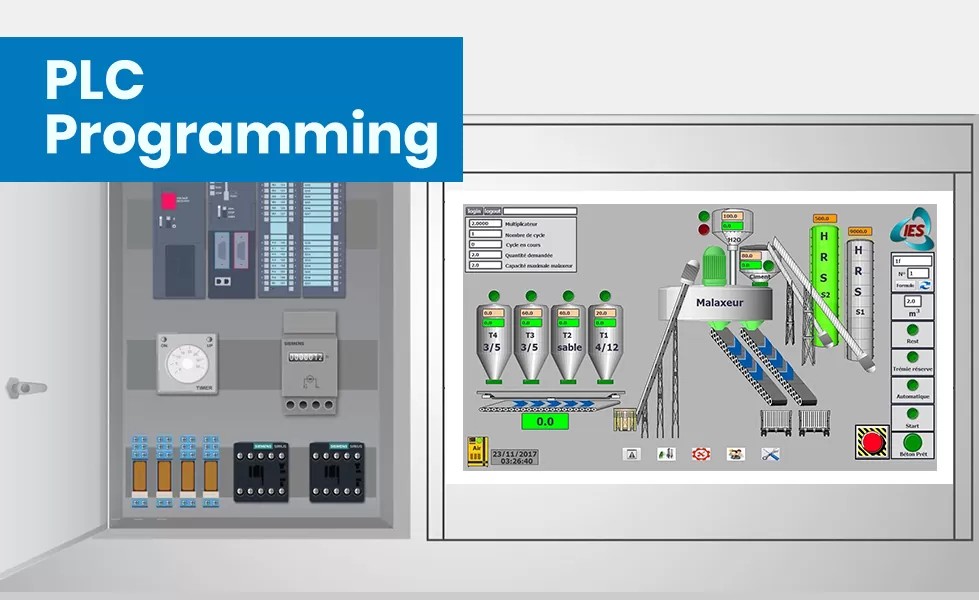
PLC programming languages vary, but Ladder Logic remains the most widely used in manufacturing. It is visual, intuitive, and designed for industrial control applications.
Why Ladder Logic Is Key to Industrial Automation
Ladder logic visually resembles electrical relay logic diagrams, making it easier for technicians and engineers to adopt. It uses graphical “rungs,” resembling a ladder, to represent control logic:
- Rungs represent instructions
- Contacts and coils represent inputs and outputs
- Logic flows left‑to‑right
This simplicity makes it ideal for industrial control and diagnostics.
Understanding Allen-Bradley PLCs and Their Advantage
Allen-Bradley PLCs, manufactured by Rockwell Automation, are among the most widely deployed PLC systems in the world. They are known for their reliability, modular design, and robust software ecosystem.
Key Advantages of Allen Bradley PLCs:
Allen-Bradley PLCs are built with an integrated architecture that allows for a seamless automation workflow across various components of an industrial system. This unified design makes it easier for engineers to manage everything from input devices to HMI systems efficiently. The programming experience is further enhanced by the use of RSLogix and Studio 5000 software, offering intuitive and robust tools that simplify the development, simulation, and deployment of control logic.
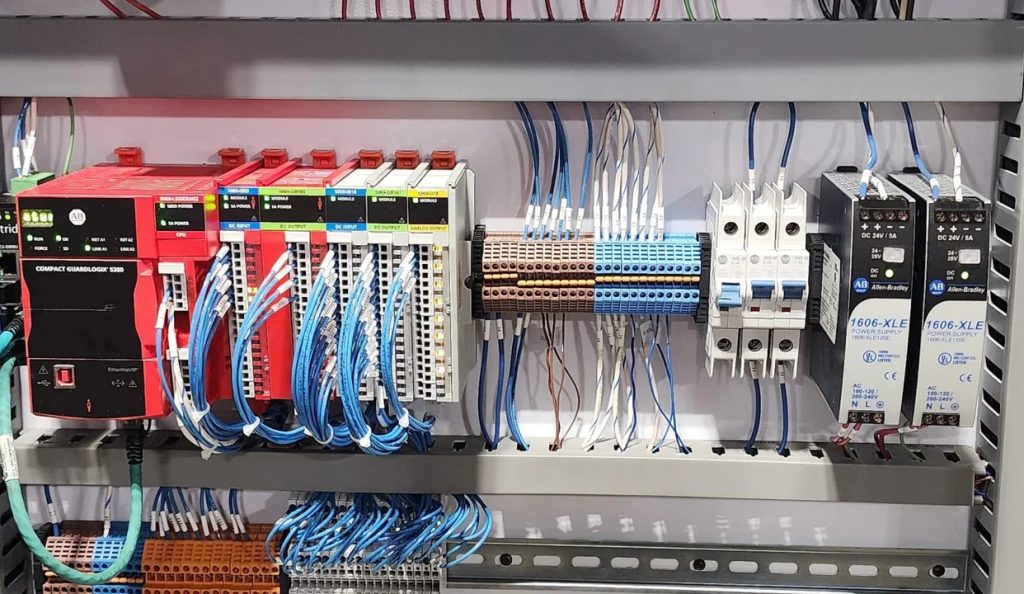
In addition, Allen-Bradley systems leverage standardized instruction sets, enabling a smoother learning curve for both beginners and experienced programmers. Their wide adoption in industries worldwide ensures that learning to program these PLCs can significantly boost your career prospects, with high demand across sectors like manufacturing, automotive, energy, and packaging.
When you enroll in PLC Programming Ladder Logic Training, hands‑on experience with Allen Bradley PLCs gives you a competitive advantage in the automation job market.
What You’ll Learn in PLC Programming Ladder Logic Training
Effective training covers both fundamentals and advanced skills:
Core Concepts
- PLC architecture and components
- Input/output scanning cycles
- Memory allocation and addressing
Ladder Logic Techniques
- Boolean logic implementation
- Timers, counters, and sequencers
- Latching and holding circuits
Allen Bradley‑Specific Skills
- Studio 5000/RSLogix basics
- Ladder editor navigation
- Tag creation & data types
Troubleshooting & Diagnostics
- Error handling
- Logic simulation
- Real‑world debugging
Core Components of Ladder Logic
Ladder logic uses simple graphical elements placed on “rungs”:
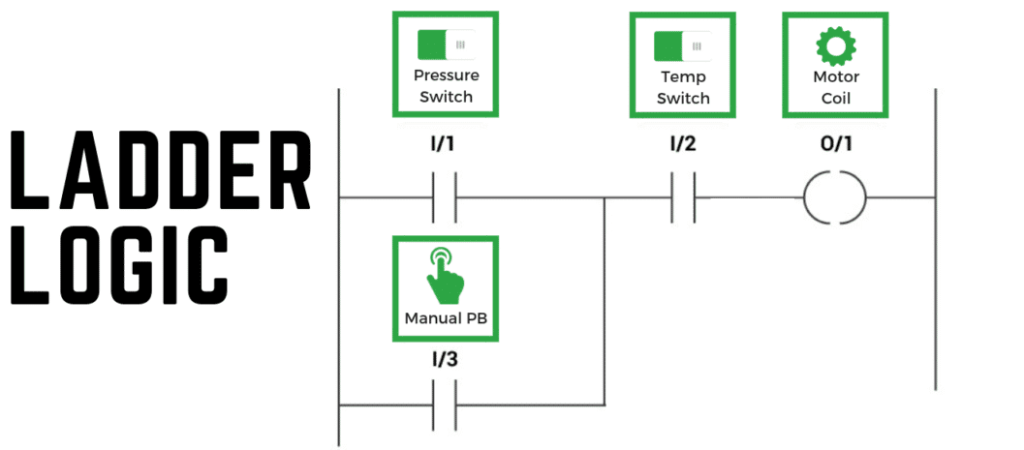
Key Ladder Logic Elements:
- Contacts—Represent switches/sensors
- Coils—Output instructions
- Timers—Delay functions
- Counters—Count events or items
These components allow you to build logic in a visual way that mirrors physical control systems.
PLC Instruction Set: Explained
Every PLC uses instruction sets—predefined commands that tell the PLC what to do. Some common instruction types include
- XIC (Examine If Closed)
- XIO (Examine If Open)
- OTE (Output Energize)
- Counters (CTU/CTD)
- Timers (TON/TOF)
Understanding each instruction’s behavior is essential to writing robust ladder logic programs.
Allen Bradley PLC Programming – Software & Tools
Primary Software Tools
- RSLogix 500 – For SLC 500 PLCs
- Studio 5000 – For ControlLogix/LGX systems
- RSLinx Classic—Communication driver software
Allen-Bradley’s programming environment uses tag‑based addressing, which is more flexible and descriptive than traditional fixed memory addresses.
Hands‑On PLC Training: Best Practices
Industrial automation is a practical discipline. Here’s how you can maximize your training experience:
Training Tips
- Build projects from day 1
- Simulate logic before deployment
- Document every step
- Practice real‑world fault diagnosis
- Review industrial standards
Common Ladder Logic Examples for Beginners
Learning with examples boosts understanding. Here are foundational ladder logic scenarios:
🔹 Example 1—Basic Start/Stop Motor Control
|----[Start PB]----[Stop PB]----(Motor Output)----|
This sequence turns on a motor using a start push button and stops it using a stop button.
🔹 Example 2—Timer Delays
|----[Input]----(TON Timer)----[Output After Delay]----|
Timers introduce controlled delays, like turning on a fan after a warm‑up interval.
Advanced Techniques: Timers, Counters & Sequencers
Once you master the basics, advanced ladder programming focuses on:
- Sequencer logic
- Shift registers
- Process state machines
- PID algorithm integration
These concepts elevate your ladder logic beyond simple on/off control into complex machine automation.
Troubleshooting and Debugging PLC Programs
Effective debugging is vital:
Troubleshooting Tips
- Check scan cycles and logic flow
- Use simulator tools
- Monitor real‑time tags
- Validate sensor/actuator wiring
Debugging is often the difference between a working program and an industry‑ready controller.
Real‑World PLC Application Case Studies
Here’s how PLC programming, as taught in PLC Programming Ladder Logic Training, is used in real industries to solve critical automation challenges:
Automotive Manufacturing
PLC-controlled assembly line sequences handle welding, component positioning, and robot coordination to maximize speed and precision.
Packaging Systems
Systems use PLCs for conveyor control, fault detection, product counting, and automated sorting—reducing errors and improving throughput.
Chemical Processing
Interlocks, safety shutoffs, and temperature control loops are managed by ladder logic programs that ensure safe and consistent operations.
Professionals trained through comprehensive PLC Programming Ladder Logic Training are well-prepared to manage, program, and troubleshoot such systems with confidence, ensuring reliability and compliance across sectors.
Career Opportunities After PLC Training
Completing PLC Programming Ladder Logic Training opens doors to high-demand roles such as:
- PLC Programmer
- Automation Engineer
- Controls Technician
- Electrical Systems Designer
Industries hiring include automotive, pharmaceutical, food processing, oil & gas, water treatment, and smart manufacturing. With the right training, you’ll not only understand programming principles but also how to apply them in complex industrial environments—giving you a strong foundation for a successful career in automation.
How TheCoreSystems Can Help You Succeed
TheCoreSystems is a leading software development and AI‑driven training company based in Chandigarh, India. We provide advanced technical education and industry‑aligned PLC training.
What We Offer:
Expert-led training programs
Real‑world project exposure
AI, IoT, IIoT, and Data Science integration
Embedded systems and cloud computing
Career guidance & placement support
Our PLC courses include hands‑on PLC programming, ladder logic, and Allen-Bradley modules designed for both students and industry professionals.
FAQs—PLC Programming Ladder Logic Training
What is ladder logic?
Why focus on Allen-Bradley PLCs?
How long does training take?
Do I need programming experience to start?
What industries use PLC programming?
Can I program PLCs remotely?
Is ladder logic still relevant in 2026?
What tools do I need for Allen-Bradley PLCs?
Conclusion
Mastering PLC Programming Ladder Logic Training—especially on Allen Bradley systems—equips you with one of the most valuable automation skills in today’s industrial environment. From foundational concepts to advanced sequencing techniques, a strong grasp of ladder logic opens doors to high‑impact careers in manufacturing, robotics, and smart industries.
With structured PLC Programming Ladder Logic Training, hands‑on projects, and real‑world exposure, you’ll be prepared to automate complex systems with confidence. And by training with expert partners like TheCoreSystems, a leader in industrial and AI-driven technologies, your career path will be backed by professional guidance and industry-relevant skills.